
Costa Rica Adventure: A Journey Through Paradise
Introduction: Pura Vida in the Land of Natural Wonders
Costa Rica, a jewel of Central America, offers an incredible blend of pristine beaches, lush rainforests, active volcanoes, and abundant wildlife. This 19-day itinerary takes you from the Caribbean coast to the Pacific shores, showcasing the country's most breathtaking destinations. From the canal-filled wilderness of Tortuguero to the cloud forests of Monteverde and the surf paradise of Santa Teresa, each stop offers unique adventures that will leave you with memories to last a lifetime.
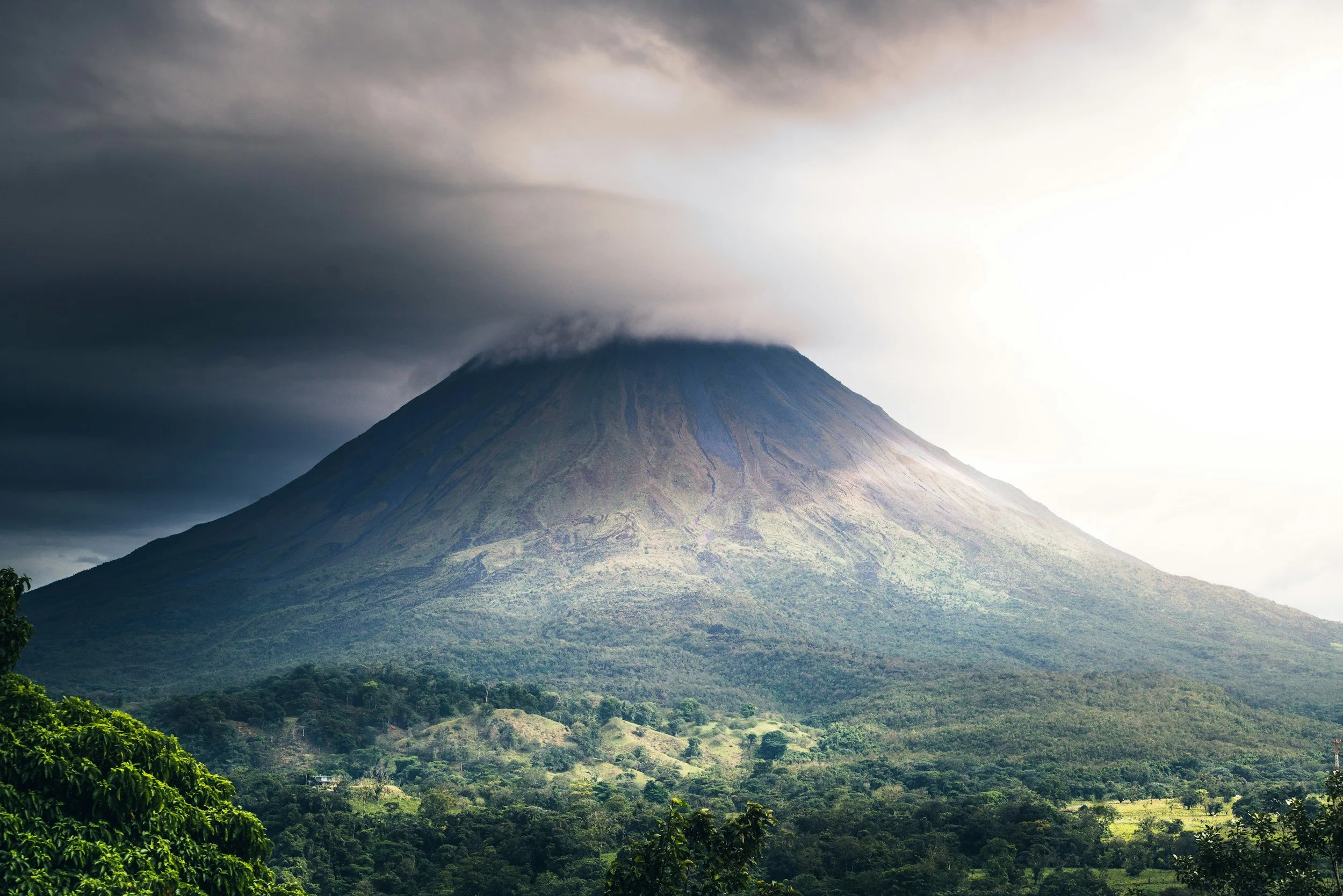
La Fortuna Volcano
Planning Your Costa Rican Adventure
Essential Travel Tips
Travel options
You can travel through Costa Rica via plane, car, bus or private vans. My personal choice was traveling by car (which you really need), and with a car you are much more flexible. Plus it will save you a lot of precious travel time! So for this travel route i’m only focused on the car route. Also have to add that I really love driving - and the distances are nicely spread!
Renting a Car in Costa Rica
A 4x4 vehicle is essential for navigating Costa Rica's diverse terrain, especially to Monteverde and Santa Teresa where roads are often unpaved, bumpy and have steep climbs (you’ll need some power in your 4x4 as well!).
Book your rental car in advance, particularly during peak seasons, we booked with Alamo as they had the best rental rating - and we had no surprises after bringing the car back. A tip: book your car rental via Booking.com - this makes sure you will skip things being dodgy, you will get a fair price and everything is well arranged.
It’s easy and safe to drive. In Costa Rica they drive on the right - just like the Netherlands - and at every gasoline station there’s someone helping you to fill the tank. We’ve also been able to pay by card at every gas station we’ve been to.
The official driving speed is not fast, depending where you are, it’s between 40 - 80 km’s an hour. And when you speed up and want to take over a slower car, it’s helpful to know that many people drive on the left, and most of the overtaking happens on the right.
Be mindful of really bad driving. If there’s one thing we noticed, nobody looks and everyone just does whatever they want haha.
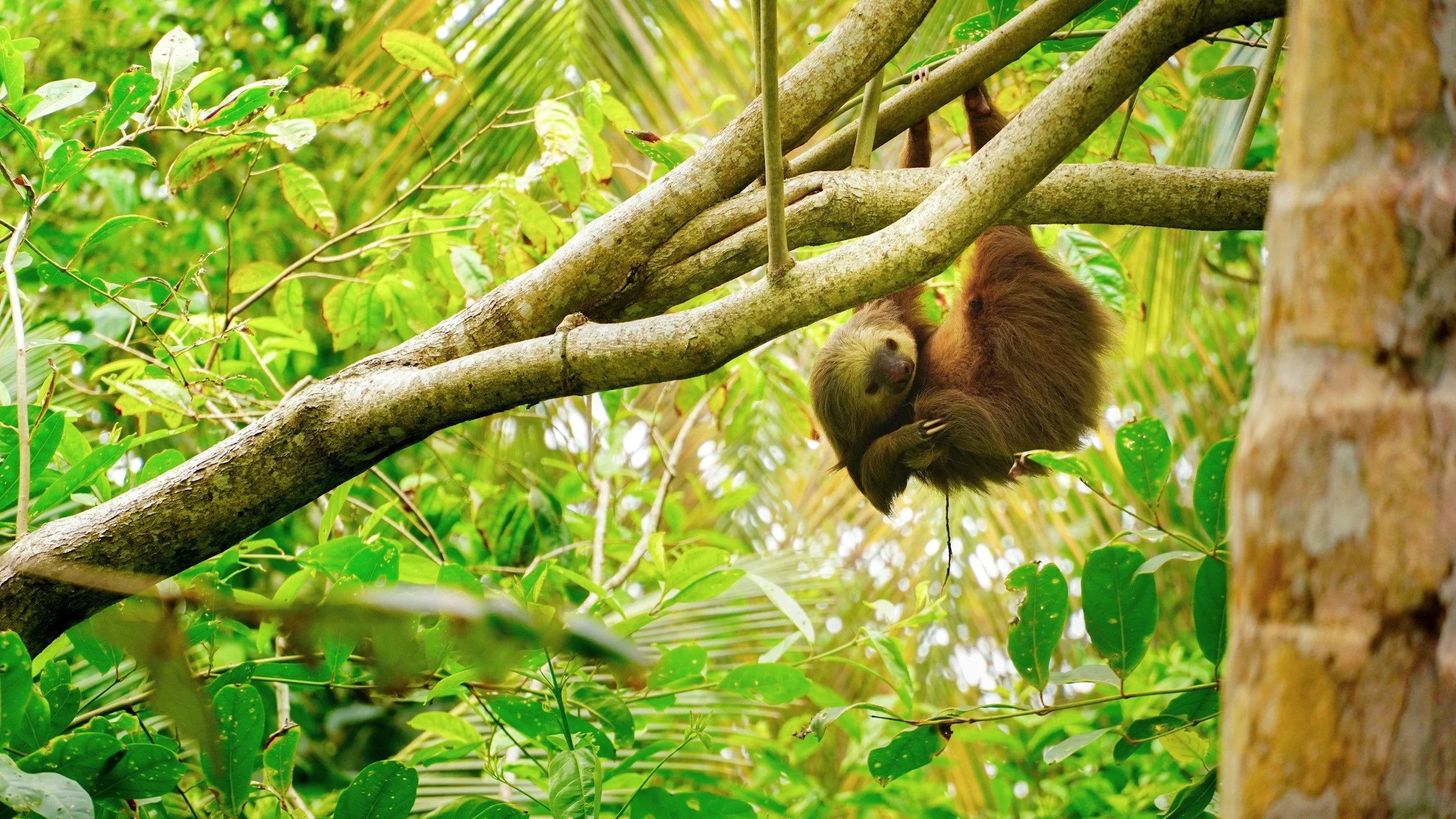
A Two-Fingered Sloth - they love hanging out in Almond trees.
Booking in Advance
This is really a pro tip: you really need to book important things in advance, with the biggest focus on nice accomodations and access to the national parks. This was the most pre-planned trip i’ve ever taken an I don’t regret any minute of it - it really was needed.
Accommodations, especially in Tortuguero and La Fortuna, should be booked well in advance to secure the best options and prices.
Popular sightseeing destinations in La Fortuna, Monteverde and other destinations can fill up quickly as well, so consider booking ahead. I used the original booking sites or some guided tours and excursions via http://www.viator.com and it worked out great!
National park entry tickets are always bought separately from tours, and can be purchased online through Costa Rica's official website: https://serviciosenlinea.sinac.go.cr/ - make an account first and from there you can book any national park of choice. Book a few days in advance, as spots are very limited and tend to fill up quickly!
For all the national parks, if you love birds, go as early as possible - they are actively feeding in the very early hours.
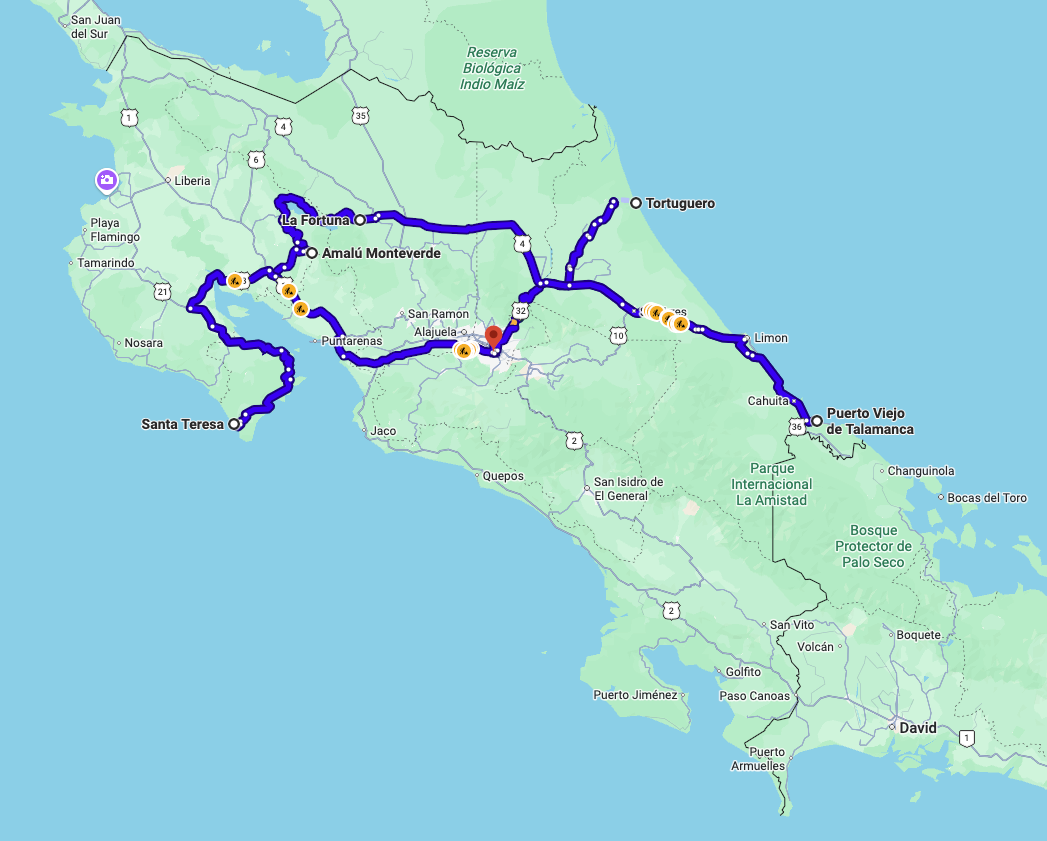
Route: San José - Tortuguero - Puerto Viego - La Fortuna - Monteverde - Santa Teresa - San José. It’s 1220 kilometer’s - about a 23 hour drive in total.
The Itinerary: From Caribbean to Pacific
Day 1 (1 night): Arrival in San José
Focus: Arrival & Acclimatization
Begin your Costa Rican adventure in the capital city, San José. Nestled in Costa Rica's central valley, San José serves as the country's vibrant capital and the perfect starting point for your adventure. This day is all about settling in and preparing for the journey ahead. Most people skip San José - so we decided to just use it as our arrival and drive off early the next morning.
Optional activities:
Visit the central market to experience local culture and flavors
Explore the city's museums if time permits
Logistical Reminders:
Get sufficient cash for your Tortuguero visit (no ATMs available there)
Pick up your pre-booked 4x4 rental car (preferably straight from the airport - Alamo has a shuttle that brings you to their rental location and back to the airport)
Rest and acclimate to the Costa Rican climate
Food Recommendations:
Find a local "soda" (small, family-run restaurant) for an authentic Costa Rican casado - a traditional meal with rice, beans, plantains, salad, and a choice of meat or fish
If you find a local supermarket - stack up on MadeGood organic oat bars. We practically lived on it haha.

San José, the capital of Costa Rica - beautiful sight in the valley.
Days 2-4 (2 nights): Tortuguero - The Land of Canals & Wildlife
Focus: Canals, Wildlife, and Natural Beauty
Known as the "Land of Canals," Tortuguero is a remote paradise accessible only by boat or small plane. This intricate network of waterways, mangroves, and dense rainforest creates a sanctuary for incredible biodiversity, including a.o. howler monkeys, toucans, great green macaws, red-eyed tree frogs, strawberry poison dart frogs, jaguars, vipers, caimans, and sea turtles (during nesting season). The name translates to "Land of Turtles," reflecting its vital role in marine conservation. With no cars and limited development, Tortuguero offers an authentic immersion into Costa Rica's wild heart, where the rhythm of nature sets the pace of life.
Getting There:
Drive to the designated boat dock (approximately 3 hours from San José)
Park your 4x4 at the paid parking. It’s helpful to know that the hotel will make sure everyone at the dock knows you are arriving - they will also inform you on which boat to take to transfer you to your lodge - the water-taxi is included both ways and takes about 1,5 hours each way- it’s really well organized.
Note: The park is only accessible by water, with the last boat departing at 4:30 PM
Accommodation:
Tortuguero Casa Pelican:This spot is located next to the main street and has a nice sunset deck. That street is perfect, with direct access to the national park.
Good to know about the location:
Tortuguero main street is super small (it’s literally a tiny street with everything you need) - I think you walk in 10 minutes from one end to the other. This is also the reason that when you plan it right - you can do everything easily in two days. We booked the night tour at arrival (6PM to 8PM) and the canoe tour at (6AM to 9AM) - with the jetlag you are going to be perfectly in tune with this rhythm.
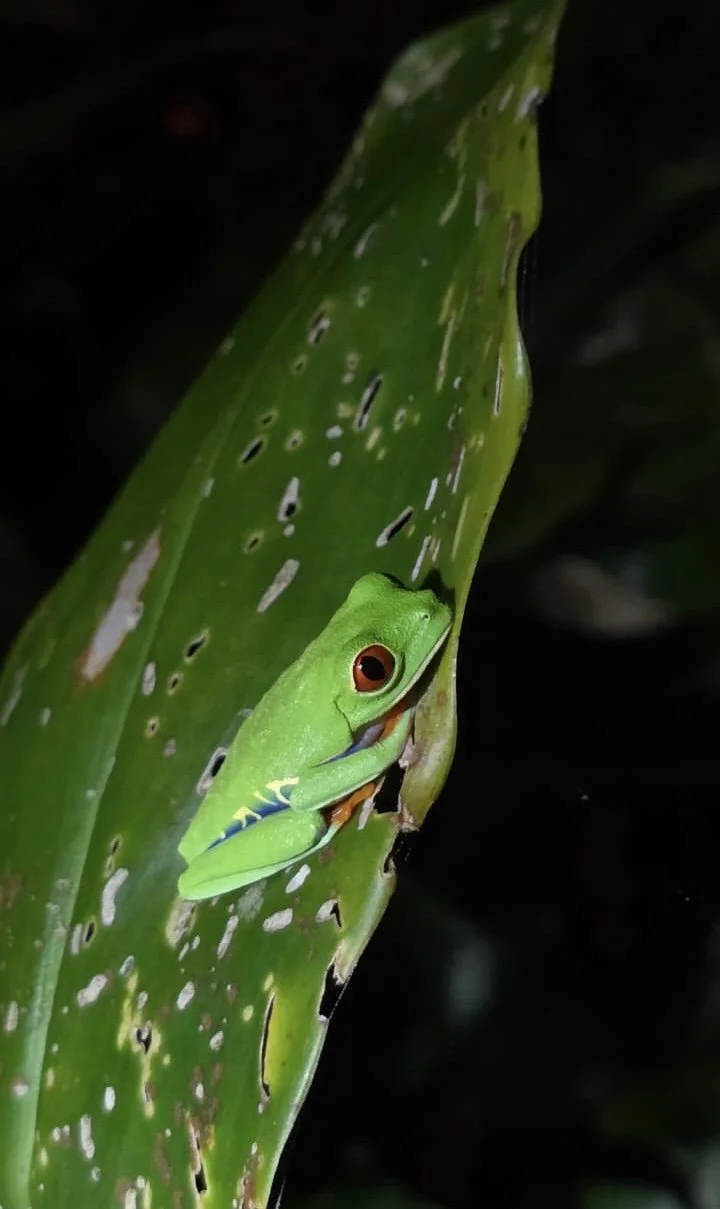
Spotted this Red Eye Tree Frog on the night tour, when they are asleep you just see them fully green on the leaf, they hide well!
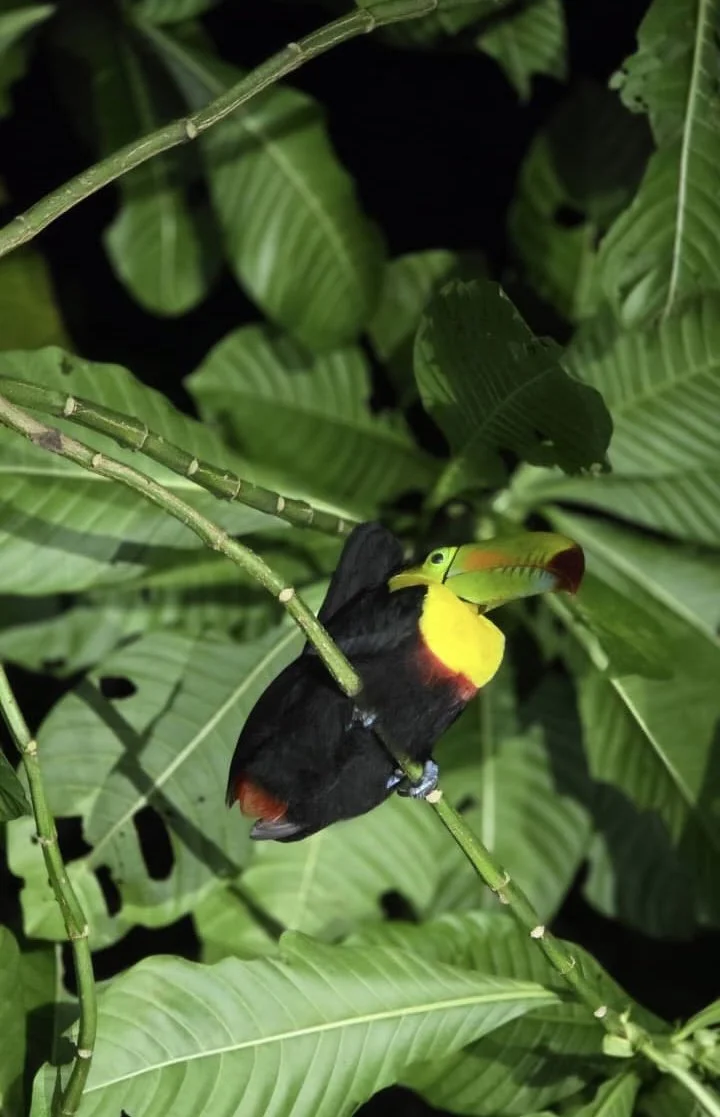
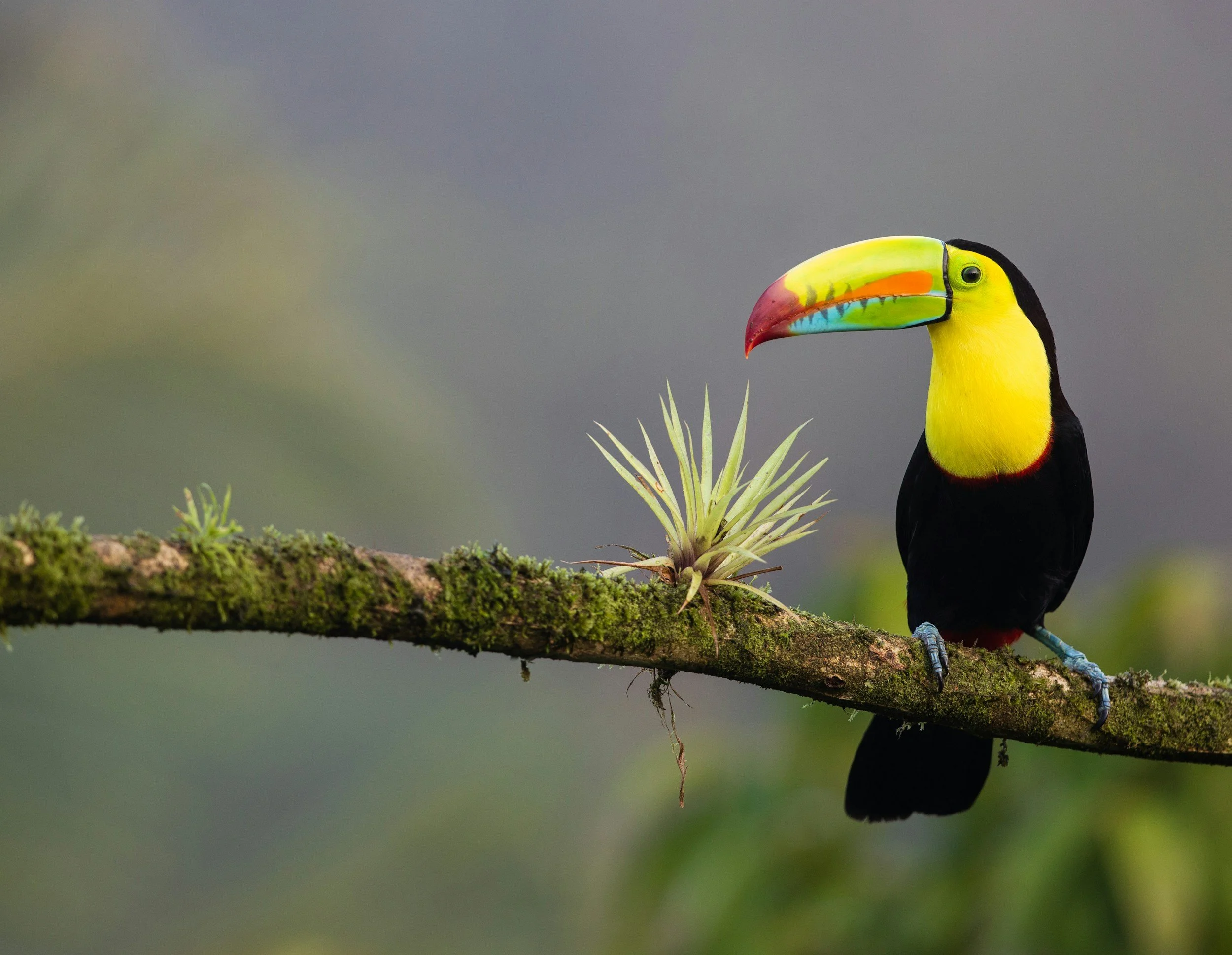
A Keel-Billed Toucan, they love Mango trees - you’ll spot them in there!
Booked Tours:
Jungle Night Tour on Local Trail
Make sure you have the correct clothing for the excursion! :-)
Meeting point: make sure you double check and communicate the meeting point. For both tours we had miscommunications on where to be - so it’s helpful to double check.
Experience the jungle after dark when nocturnal creatures become active - this is where I saw the red-eyed tree frog, a toucan, spiders, two different sloths, more frogs, leaf-cutter ants, snakes, iguana’s, basilisk lizards and many insects - so worth to do this - and what an amazing start of the trip!
Tip: you can also book 2 night tours and do the other in the National Park - entree fee is $2.
Canoe Tour (3 hours starting at 6 AM)
Bring your stuff in a waterproof bag (the lightweight dry bag is perfect).
Meeting point check
Includes fruit, water, and coffee before the tour
Get a special separate National Park Water Access ticket for the excursion
Recommended to bring sunscreen, hat, comfortable clothes and binoculars. It’s a very gentle safe canoe journey, we were lucky with no rain, but it’s recommended for when it does rain, to have everything protected and dress accordingly.
Guided early morning canoe tour through the canals to spot monkeys, toucans, caimans, and diverse bird species
Additional Must-Do Activities:
Visit the National Park by foot (a different ticket - only 2 dollars). This park is very nice, we spotted the Strawberry Poison Dart here! Needless to say, when you see this frog, do-not-touch them! They are beautiful but deadly, it’s important to be careful with all the toads and frogs in this country, as with the viper snakes. Pro tip: at the beginning of the park you have a lot of rotten logs, the Strawberry Poison Dart Frog is very tiny (like a 5 cents coin) - and loves to hide in between there. Take a few minutes to stand still and search for it, your best spot to find them is in these type of logs.
Visit the beach and hopefully you will find the Great Green Macaw flying there. There are only 1000 of these beautiful birds left in the wild and we’ve had the honor to spot many of them. You can recognize them by the familiar screeching sounds we also hear in the Amsterdam parks of the parakeets.
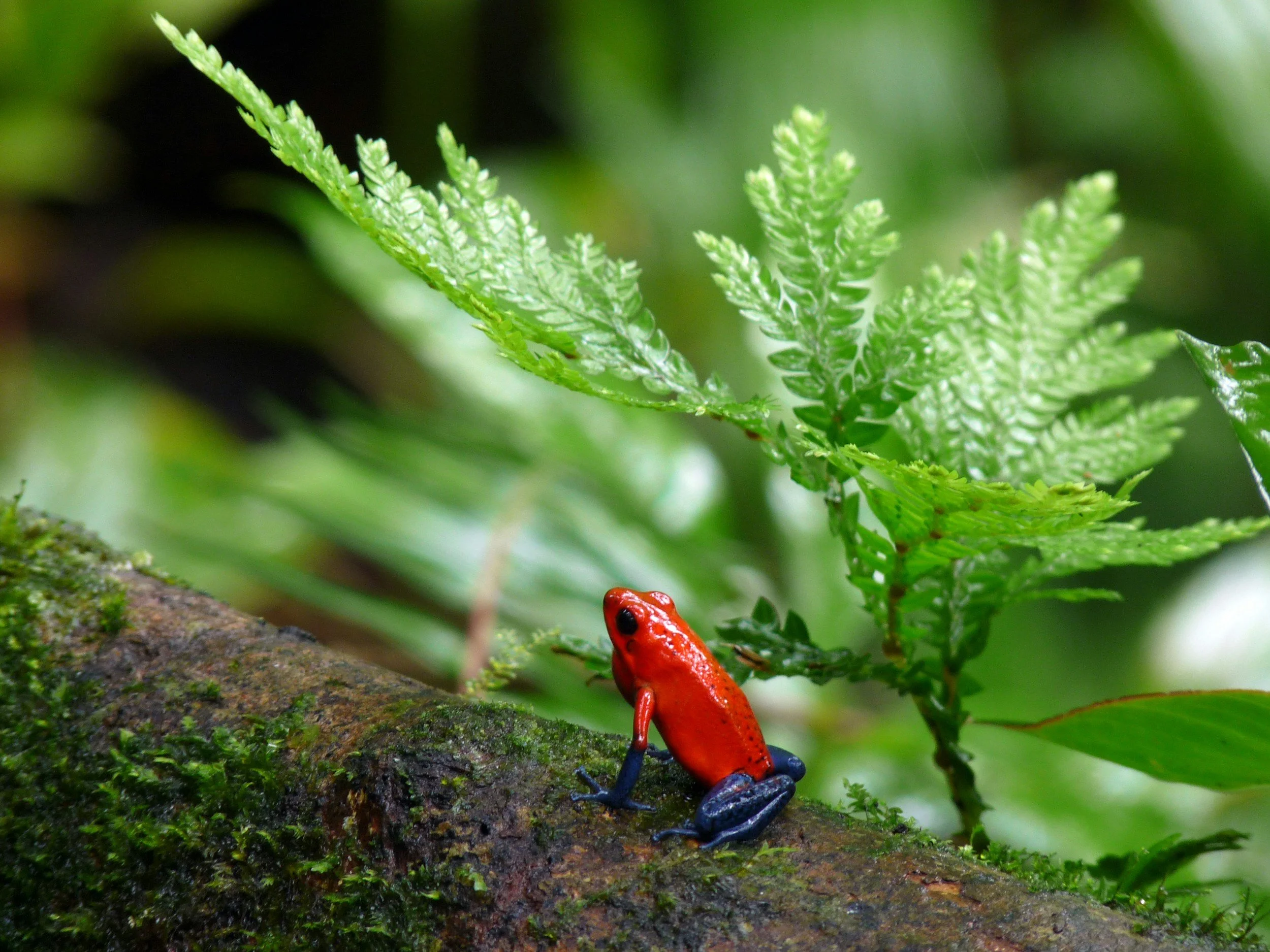
Strawberry Poison Dart Frog - tiny, the size of a 5 euro cents coin, loves to hide in rotting wooden logs.
Dining Recommendations:
El Patio: A beautiful waterfront location - they have great juices!
Buddha Café: Also a terrace by the water - and really nice Pina Colada’s!
Threma Cafe: Really great coffee!
Days 4-7 (3 nights): Puerto Viejo - Caribbean Vibes, Rainforest & Beaches
Focus: Caribbean Culture, Wildlife, and Coastal Beauty
Puerto Viejo de Talamanca pulses with a distinctive Caribbean vibe that sets it apart from other Costa Rican destinations. Once a quiet fishing village, it now blends Afro-Caribbean culture, reggae rhythms, and international bohemian influences. The area uniquely combines lush rainforest, stunning beaches, and vibrant wildlife, with sloths hanging in trees just steps from turquoise waters. The nearby Cahuita National Park offers a rare ecosystem where jungle meets sea, creating one of Costa Rica's most biodiverse coastal regions.
Getting There:
Approximately 3,5 hours drive from Tortuguero
Accommodation:
La Prometida: Located a little bit outside of town at Playa Negra. If you like nice and quiet, I recommend staying away from the city center of Puerto Viego and this hotel has great vibes!
Must-Do Activities:
Jaguar Rescue Center: A guided tour to see rescued sloths, monkeys, toucans, and more. The rescue center is not very big, but the tour is wonderful and it’s a great way to learn more about wild life preservation and conservation efforts, and of course to see the animals up close as well! Book tickets online in advance. Tours start at 9:30 AM and 11:30 AM daily.
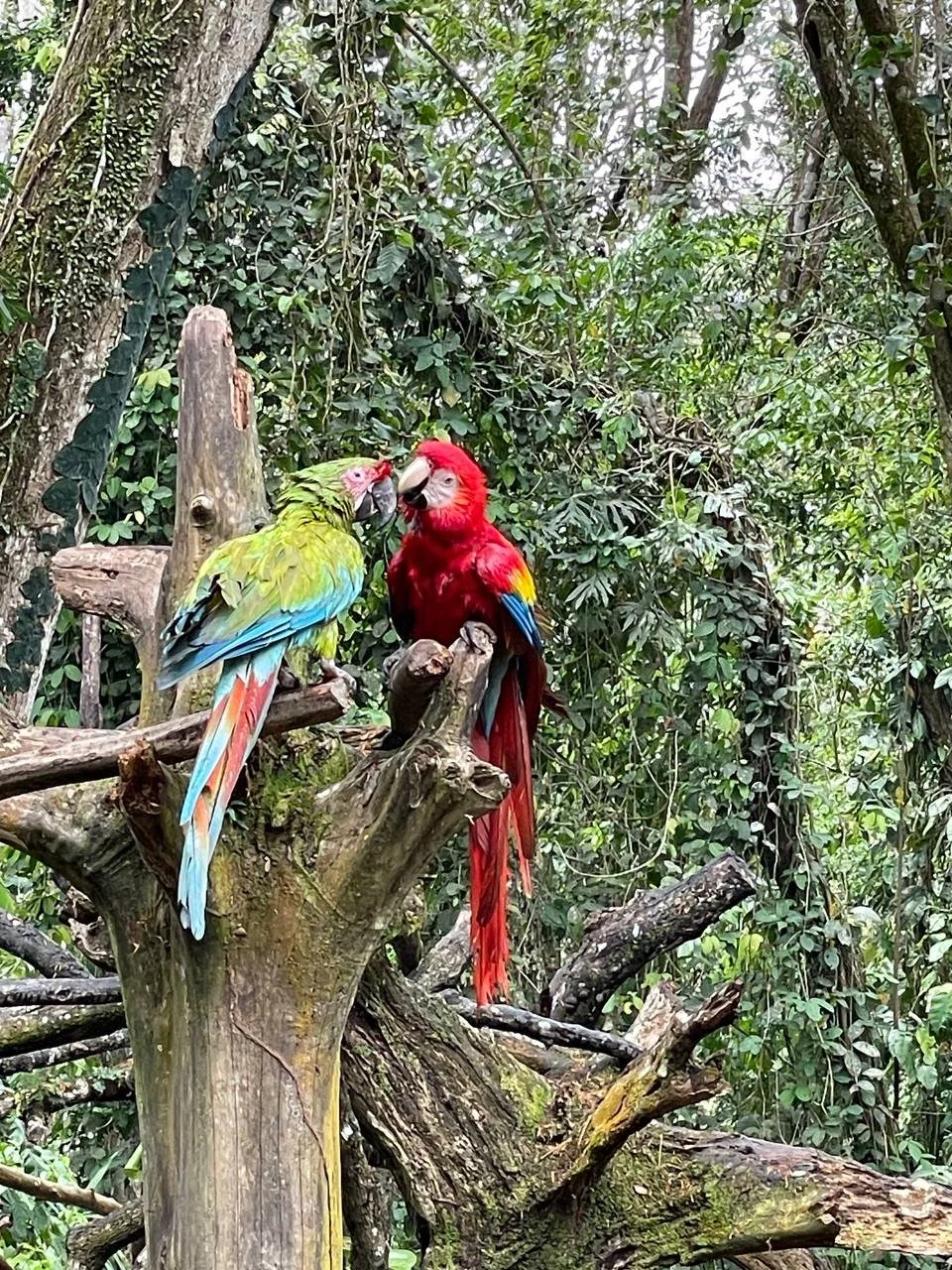
Great Green Macaw & Red Scarlett Macaw at the Jaguar Rescue Center
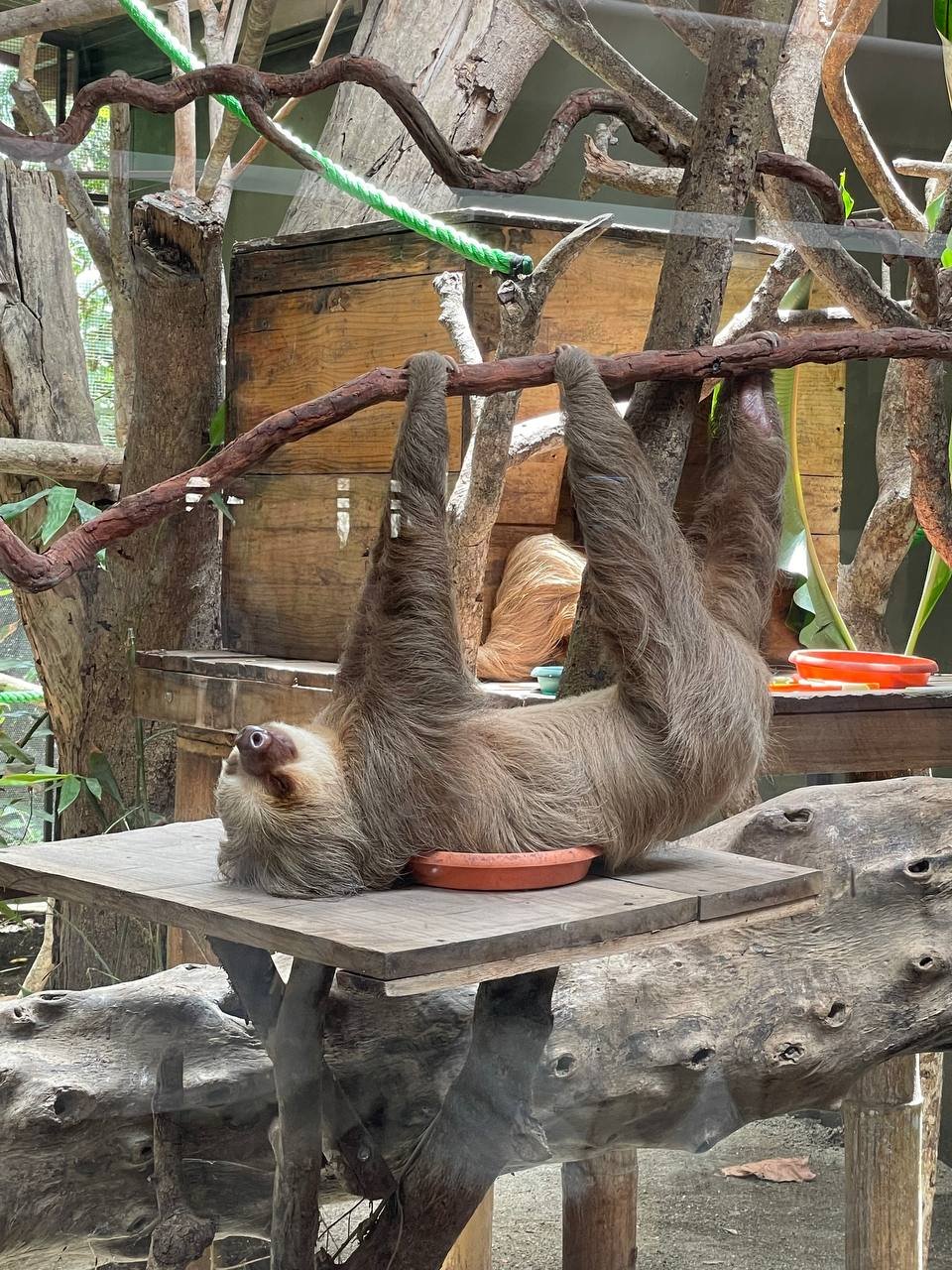
A Two-Fingered Sloth at the Jaguar Rescue Center
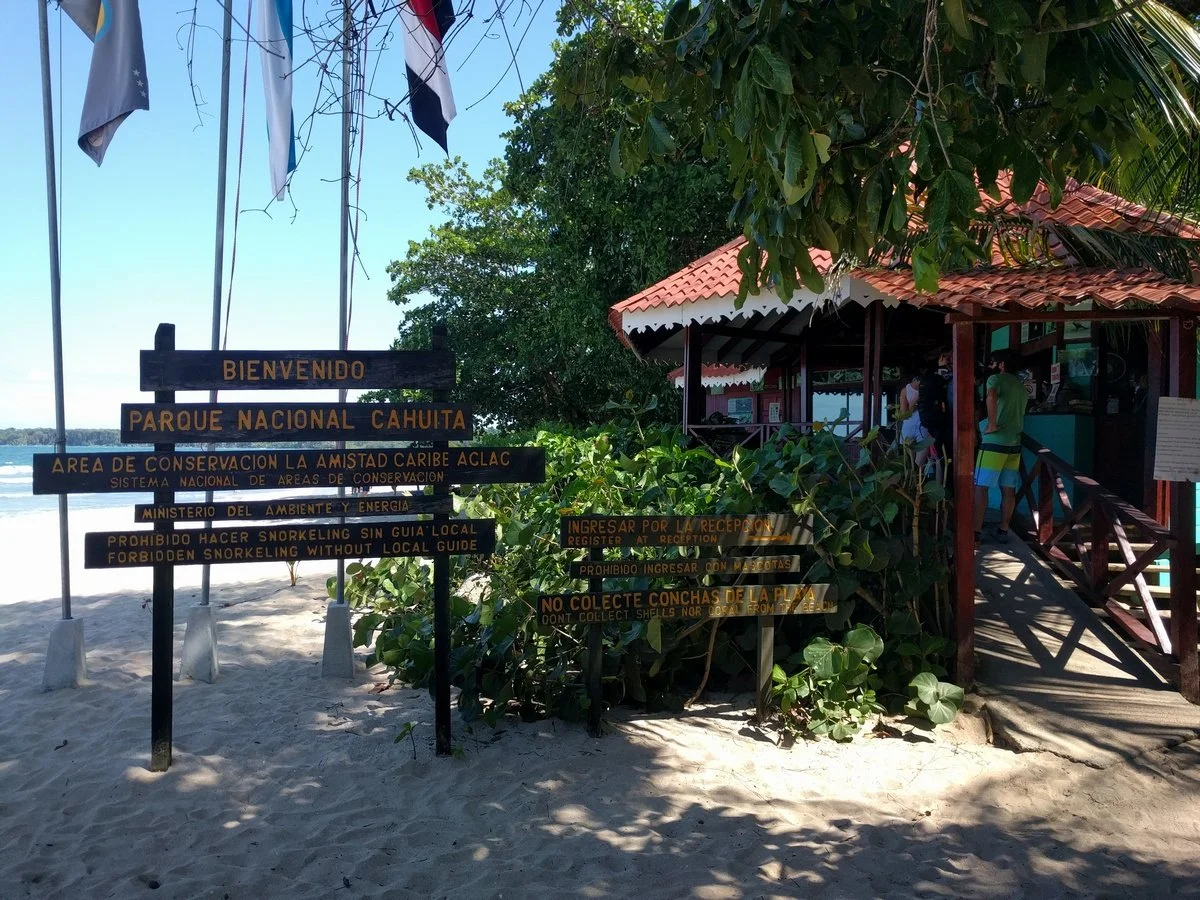
Kelly Creek Station - Cahuita National Park
Cahuita National Park: Hike trails where jungle meets the sea. What an amazing journey! Start early at 8 AM for the best wildlife spotting. There are two options for entry, Puerto Vargas (closer to Puerto Viejo) or Kelly Creek Station (both have entry fee). We chose Kelly Creek station, we had the most beautiful start there from that side, it was an amazing trail, very diverse from swamps, to beautiful beaches, to “dead zones” and jungle - lots of different monkeys, coatimundi, raccoons, birds, insects. It’s a very long trail, and its nice to take your time. Make sure you bring enough water, the hike is about 9,6 kilometers. Bring your swimsuit too if you want to take a plunge in the beautiful blue water!
Manzanillo National Park: it’s a nice walk at the beach, with a beautiful ocean look-out point very close by on your trail. Entry is donation based and it was a perfect extra experience before going to the Cahuita National Park. Loved the start at the beach seeing sloths, vultures and eagles. I recommend.
Punta Uva Kayaking Tour: A 2-hour guided kayaking adventure to spot sloths, turtles, monkeys and iguanas. I wanted to book this tour, but didn’t have the time anymore, but I saw where the tour was and it looked amazing. If you are there, I would definitely do it!
Cycling Tour: If you don’t want to drive, you can rent a bike to cycle along the stunning coastline from Playa Cocles to Playa Punta Uva, stopping for swims and lunch along the way. Optional route: Playa Cocles → Playa Chiquita → Playa Punta Uva → Playa Grande → Manzanillo Wildlife Refuge → Ara Manzanillo
Sunset at Playa Cocles: Enjoy beach volleyball, slacklining, and watching surfers catch their last waves.
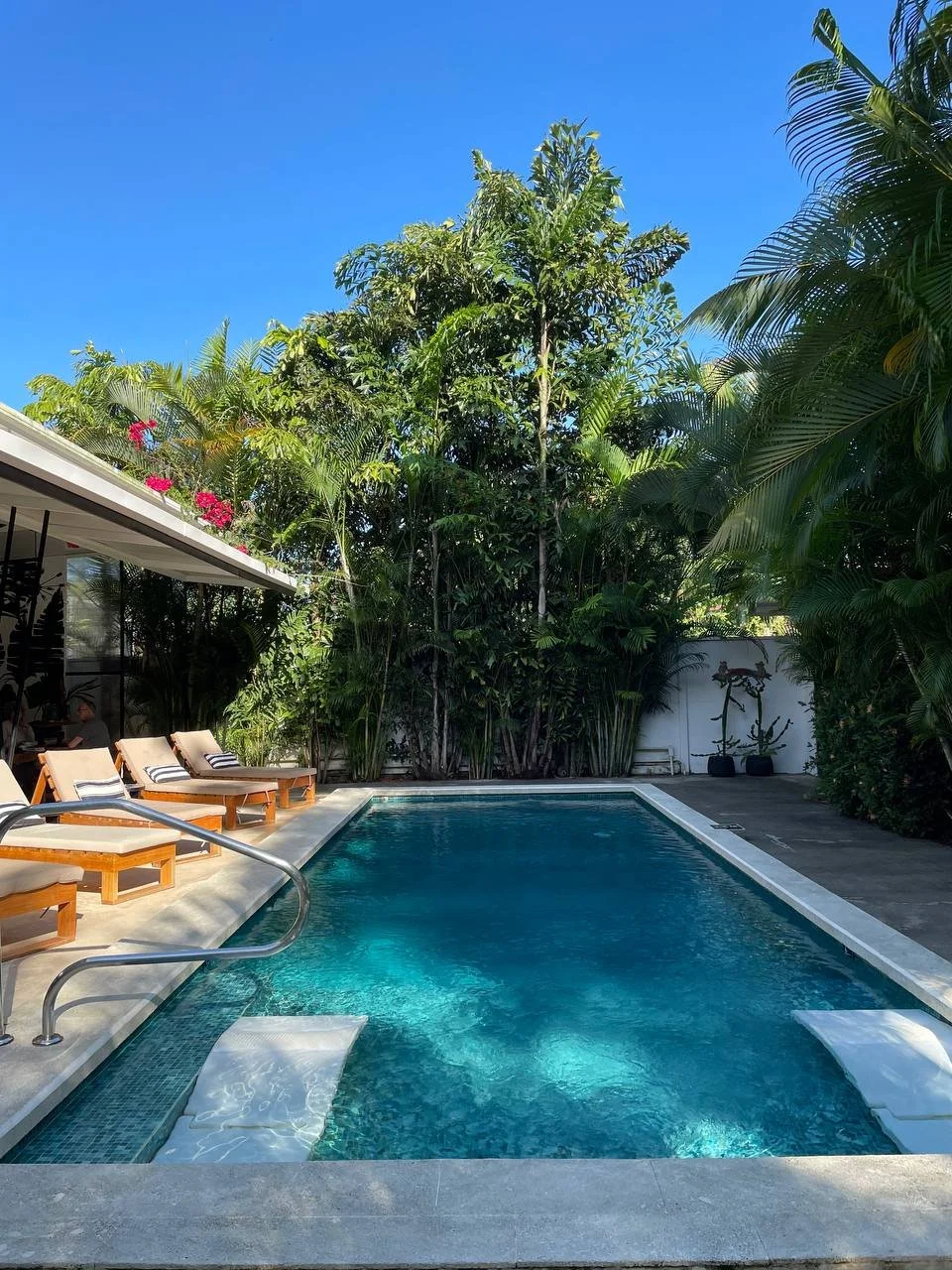
La Prometida - a little paradise with birds
Days 7-10 (3 nights): La Fortuna - Volcano, Waterfalls, Hotsprings & Adrenaline
Focus: Volcanic Landscapes, Adventure Activities, and Relaxation
La Fortuna emerged as Costa Rica's adventure hub, centered around the majestic Arenal Volcano that dominated the skyline until its eruptions ceased in 2010. This small town transformed into a bustling gateway for travelers seeking adrenaline and relaxation in equal measure. The region's volcanic activity created natural hot springs, perfect for soothing muscles after jungle hikes, waterfall descents, or white-water rafting adventures. With the perfect cone of Arenal as a dramatic backdrop, La Fortuna embodies Costa Rica's reputation as a natural playground.
Getting There:
Approximately 4 hours drive from Puerto Viejo
Accommodation:
The accommodations in La Fortuna are a bit outdated wherever you go. Luckily everything you can do in La Fortuna makes up for it! They have many amazing birds here, and we were so lucky to find a migrating Scarlett Macaw (the red one) right outside our hotel! The whole vibe in La Fortuna is really nice and it’s def worth the visit. I recommend booking early, to secure a nice spot!
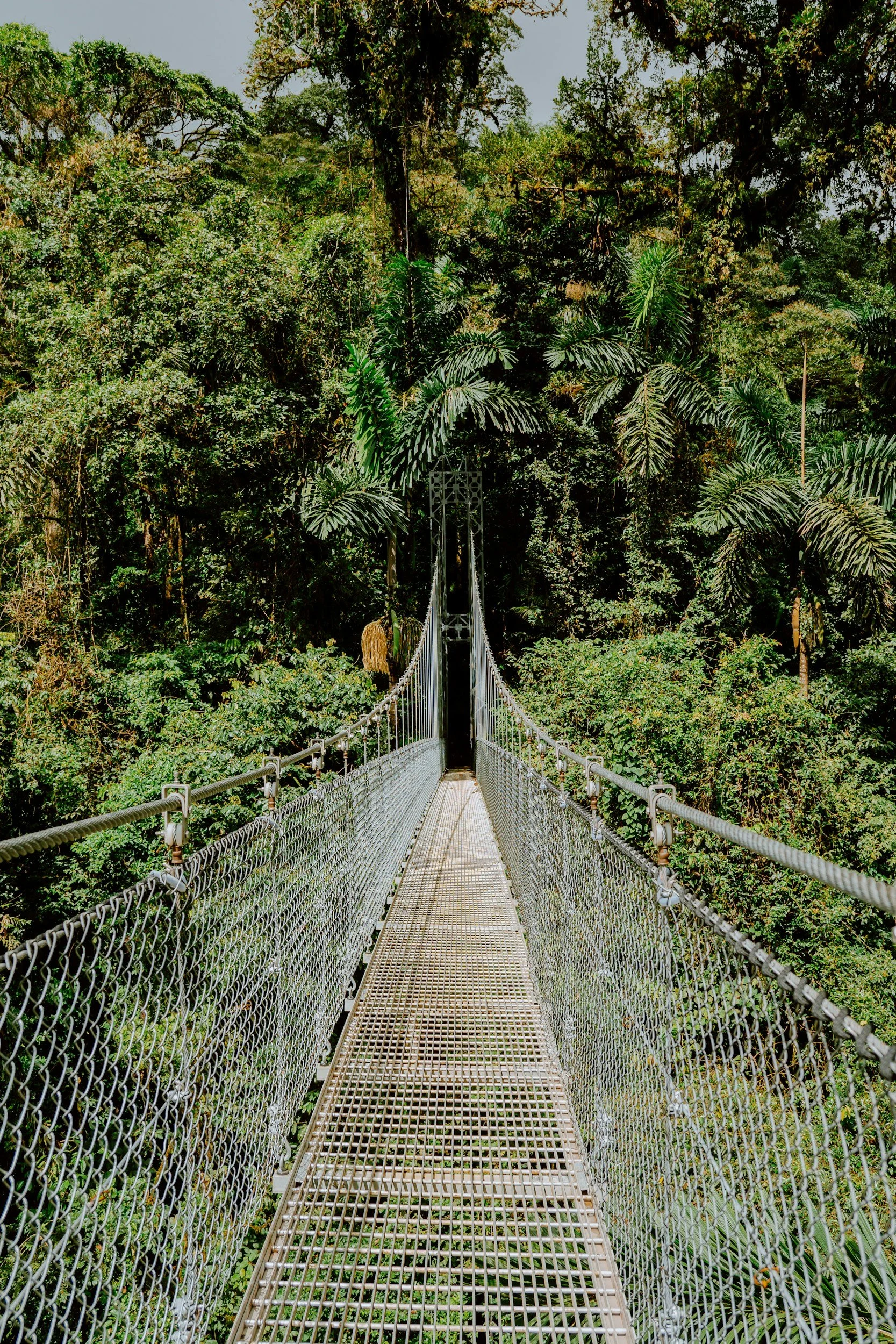
Mistico Hanging Bridges & Two Guans at the hot springs of our hotel
Must-Do Activities:
Mistico Hanging Bridges: Walk across this network of suspension bridges through the jungle canopy. I have to say this National Park felt very curated because it had a paved path - if it had more sand it would have made it more authentic like the other parks. None the less, it was a really nice trail and I was very happy I spotted a Broad-billed Motmot there, which was totally on my list! If you love spotting wildlife, it’s always helpful to go with a guide who can spot wildlife like snakes, monkeys, colorful frogs, and tropical birds. After a while with guided tours - you start to know their favorite trees, recognize their calls and you learn how to spot them as well. And with the bird watching, the Merlin Bird ID app is a total life changer! https://misticopark.com/
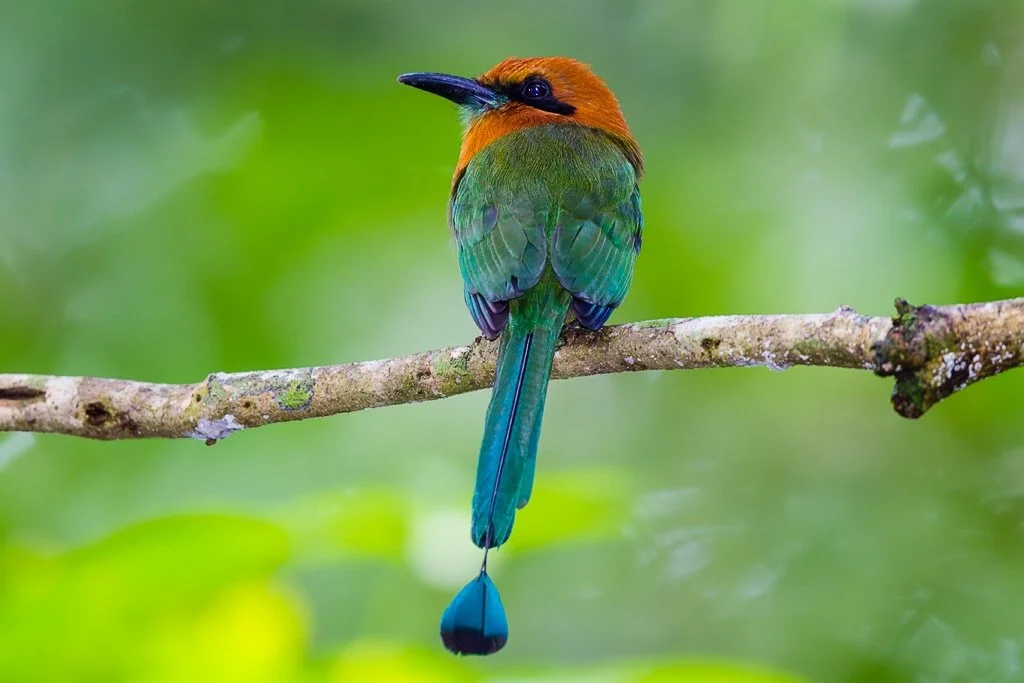
Broad-billed Motmot, sits very still and is difficult to spot.
La Fortuna Waterfall: Hike the steep staircase down to the base for a rewarding swim. The 70-meter waterfall is in the middle of tropical jungle. I thought this to be a perfect excursion for later in the afternoon! https://www.cataratalafortuna.com/
Arenal Volcano: Keep an eye out for views of the iconic volcano (often cloud-covered). Hike trails around the volcano in Arenal National Park:
Arenal 1968 Trail: 4.7 km trail through cloud forest and past lava from the 1968 eruption. This trail has beautiful old trees and the extended route to the volcano is definitely the nicer one! We paid our tickets at the entrance!
Mirador El Silencio: Less crowded hike to one of the most beautiful viewpoints
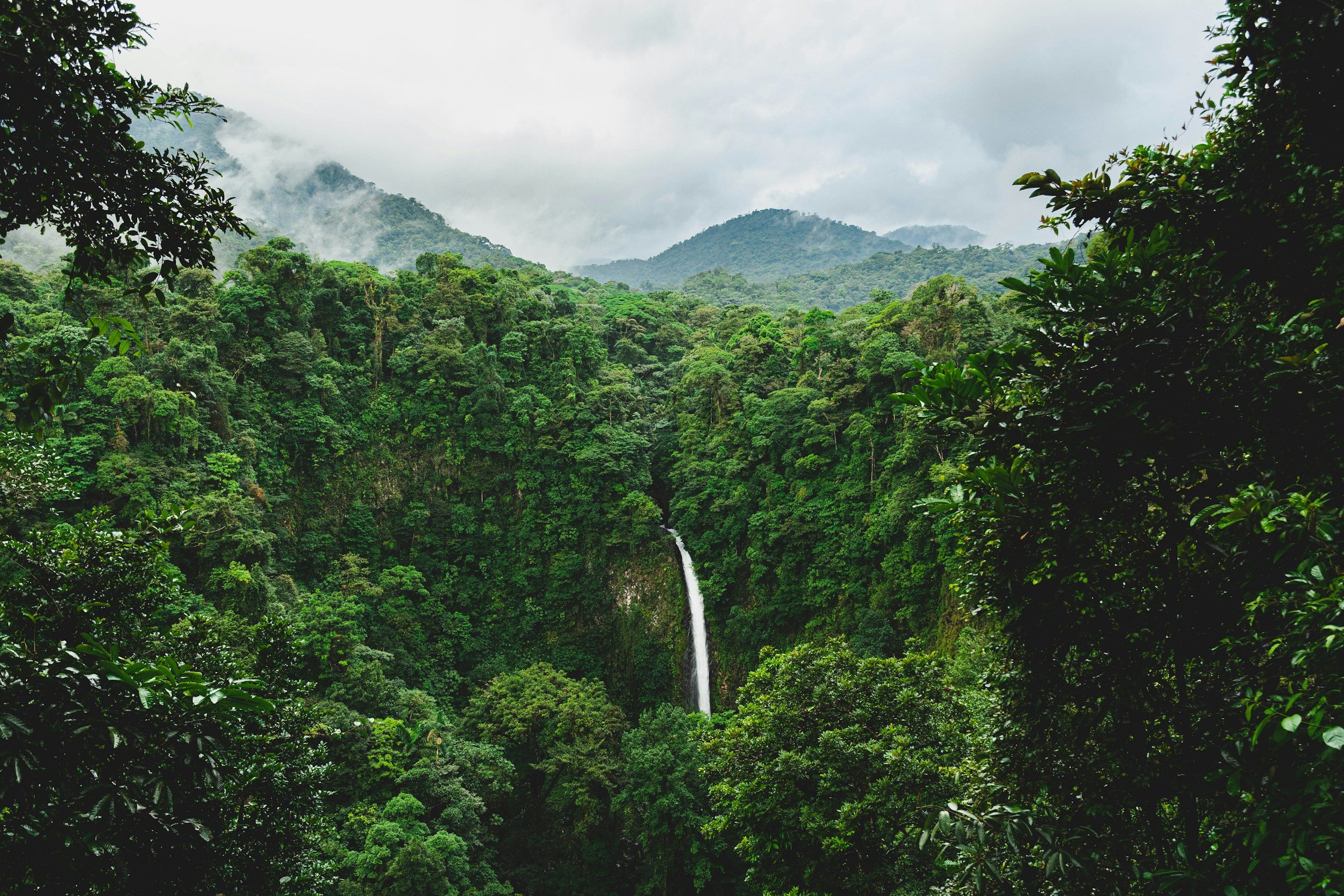
La Fortuna Waterfall
Hot Springs:
Tabacón Hot Springs or EcoTermales for a luxurious spa experience
Free natural hot spring at 10°29'19.3"N 84°43'26.5"W (go early in the morning for the best experience)
Wild Water Rafting: Balsa River rafting experience for adventure seekers, I really recommend this fun experience! Book here: https://www.viator.com/nl-NL/tours/La-Fortuna/Balsa-River-Class-2-and-3-White-Water-Rafting-from-La-Fortuna/d821-36775P1
Rio Celeste / Tenorio Volcano National Park: Day trip to see the famous azure-blue river formed by volcanic minerals. Hike the 6km trail (about 3 hours) to see the waterfall and lagoon. Be mindful, when it rains for a few days the river becomes a bit muddy so it’s better to pass on this excursion if it does.
Dining Recommendations:
Skip the hype around Don Rufino, it’s not that special.
Recommending Organico Fortuna instead! It was so good to finally get some fresh nice prepared greens and other superfoods. Stacked up on Kombucha, spirulina green bowls, nice juices and a great salad. Just what I needed!
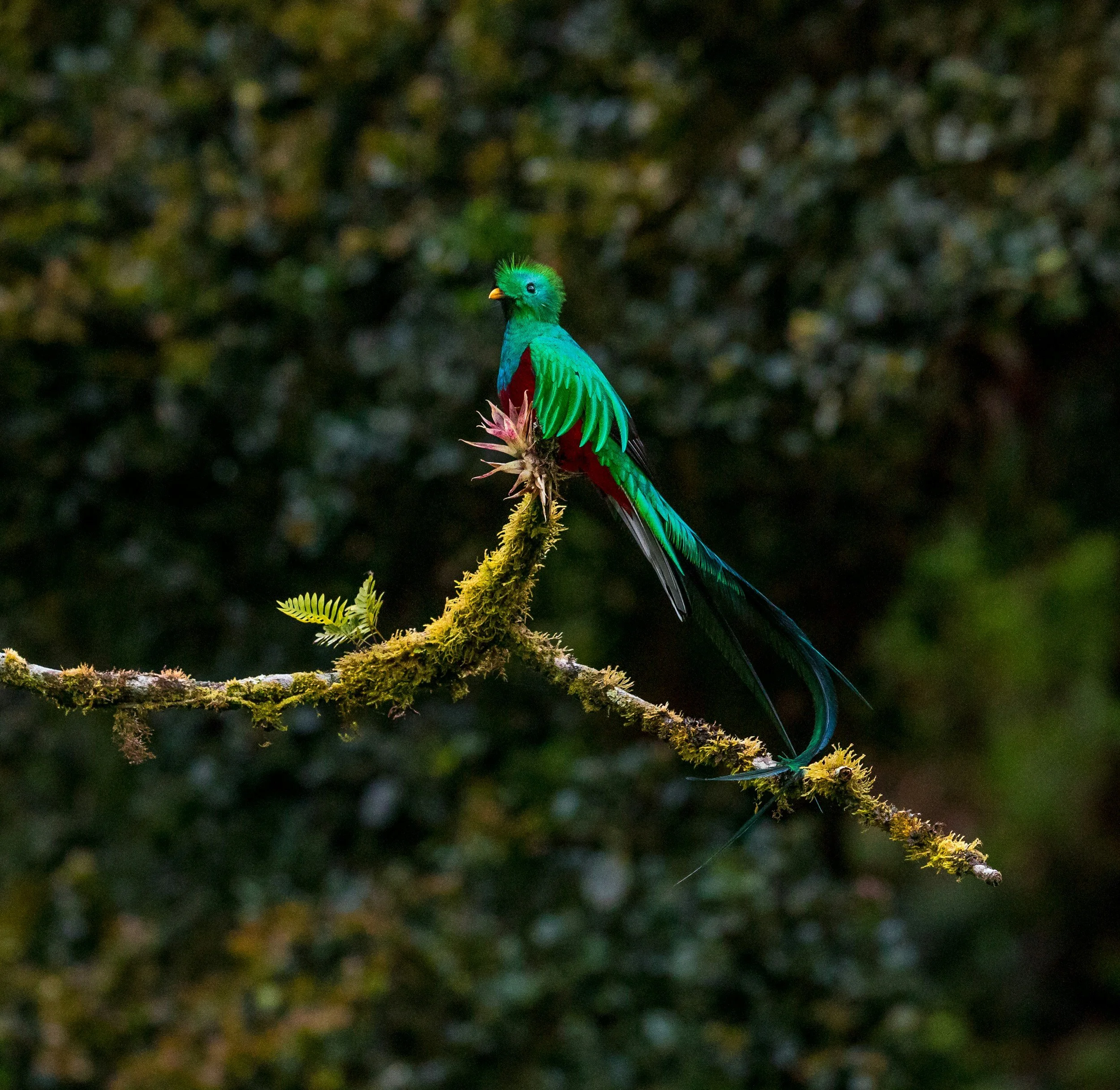
Resplendent Quetzal - they love the wild avocado trees, those wild avocado’s are the size of a small chocolate easter egg, and they eat them as a whole - making sure the seeds of this wild canopy tree is spread throughout the forest. I was lucky enough to spot this beautiful bird without a guide!
Days 10-13 (3 nights): Monteverde - Cloud Forest & Quetzals
Focus: Unique Cloud Forest Ecosystem and Birdwatching
Perched in Costa Rica's mountainous Cordillera de Tilarán at 1,400 meters above sea level, Monteverde emerged from Quaker settlers seeking peaceful refuge in the 1950s. Their conservation ethic preserved one of the world's most rare ecosystems - the cloud forest - where persistent mist creates a magical environment supporting incredible biodiversity. This misty realm hosts the elusive Resplendent Quetzal, hundreds of orchid species, and a fascinating world of creatures adapted to life among the clouds. Monteverde represents conservation success and scientific discovery, with research stations attracting biologists worldwide.
Getting There:
Approximately 3,5 hours drive from La Fortuna via a beautiful winding road through the mountains. I really loved this drive!
Accommodations:
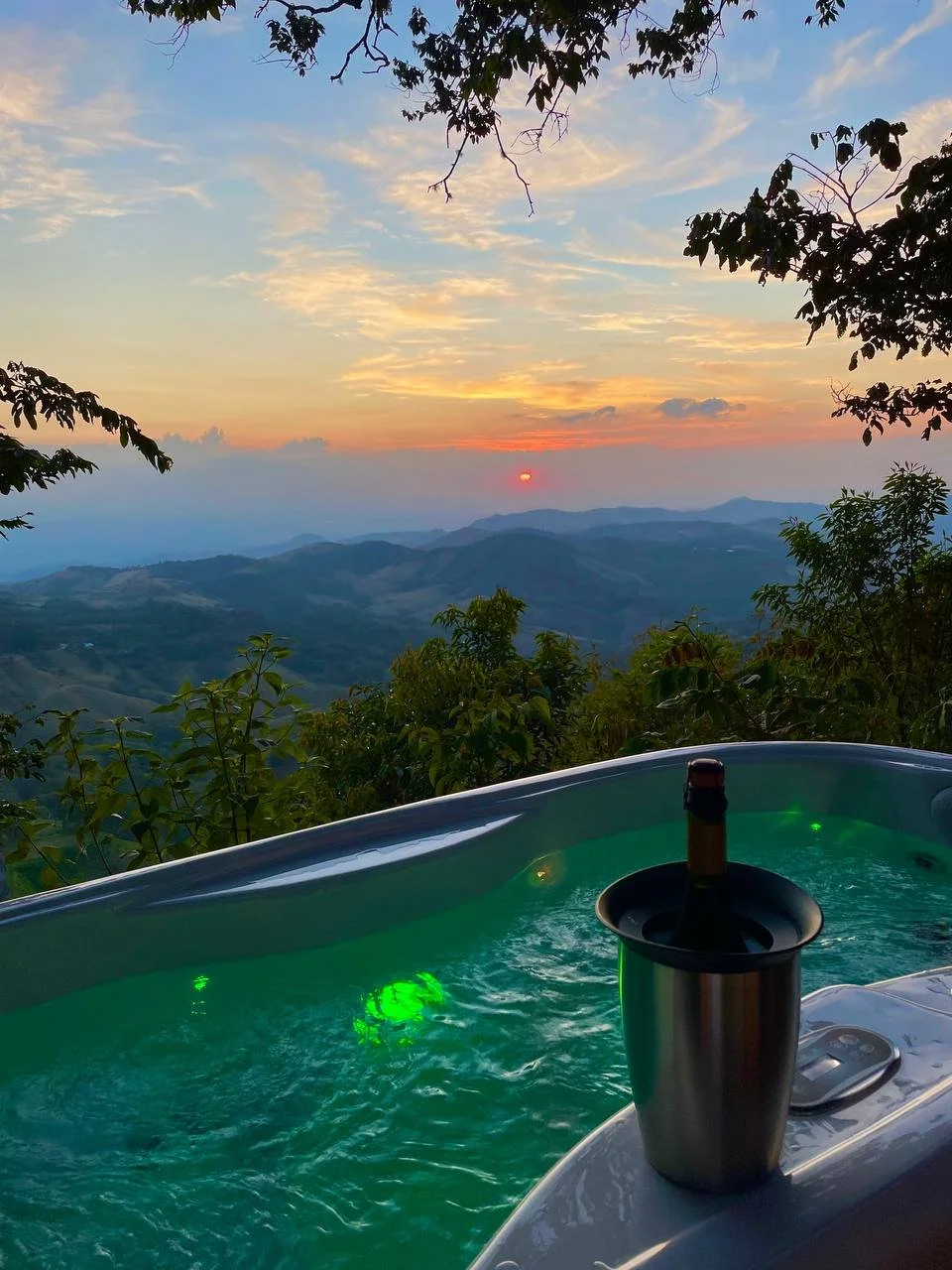
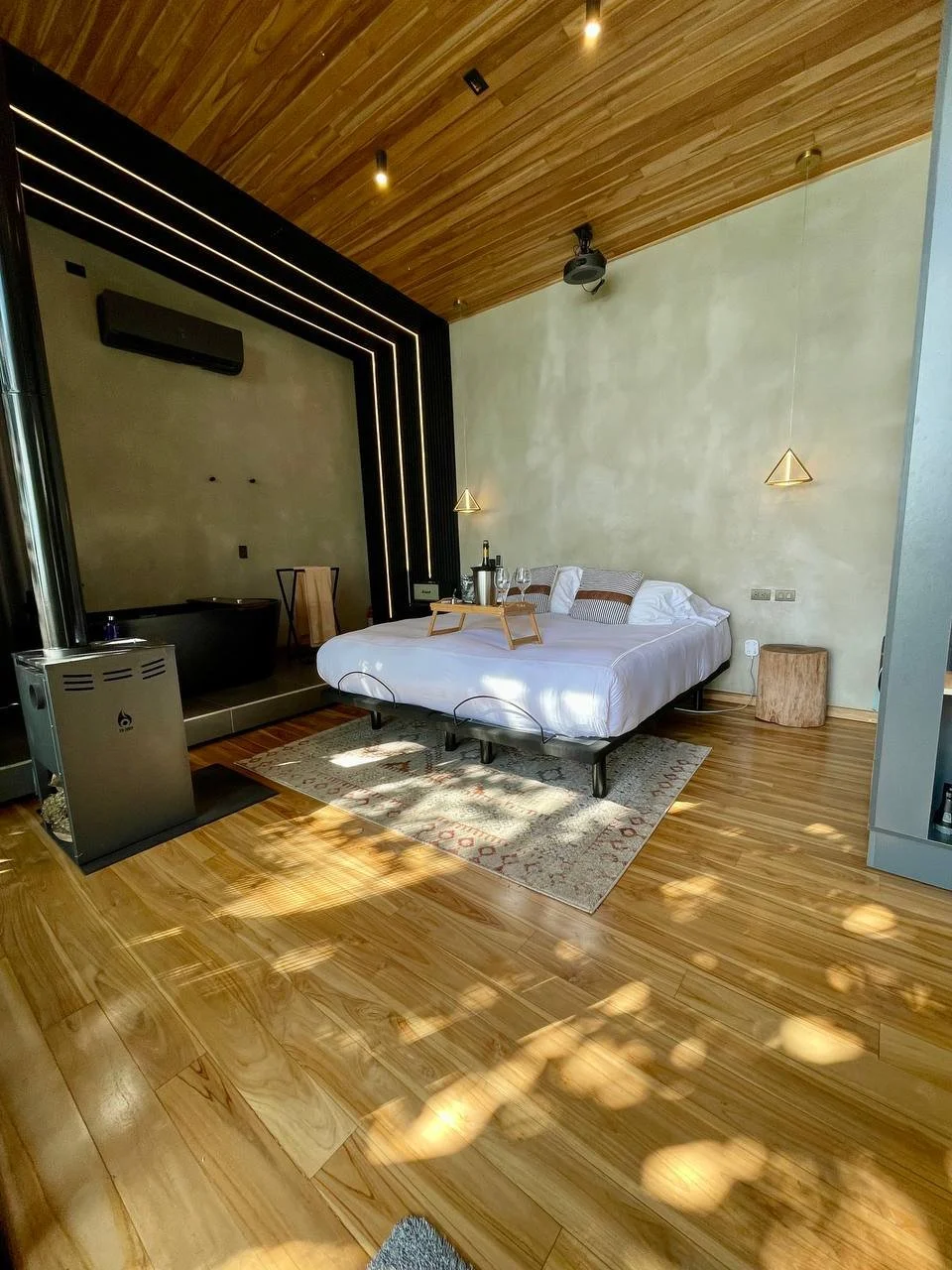
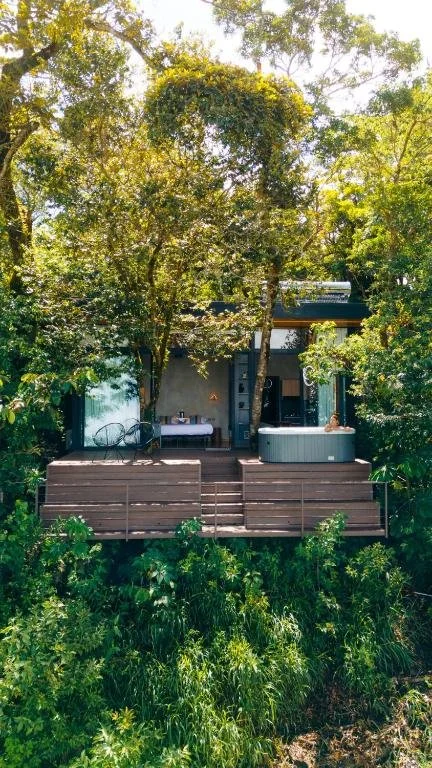
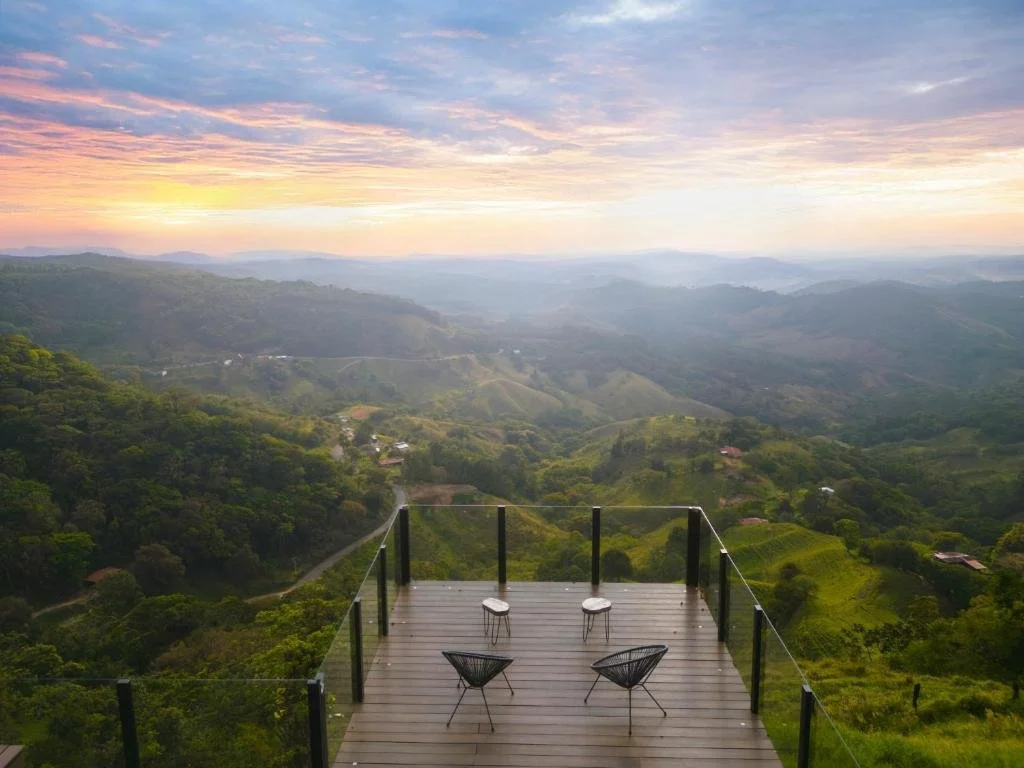
Amalú Luxury View Cabins - Black Glass House - we were welcomed here by a Keel-Billed Toucan singing, there are beautiful birds and other mamals here at this loved this private stay that has everything you need! I really recommend staying here!
Must-Do Activities:
Monteverde Cloud Forest Reserve: It’s recommended to go with a guide to spot the elusive Resplendent Quetzal and countless other bird species, either here or at the Curi Cancha Reserve. Because of our late start at 9 AM (early time slots were sold out), we didn’t get a guide for this park - but by now we were trained to find the right trees to make sure we would spot all of the birds on our list. And luckily we also spotted the Resplendant Quetzal (which loves the small wild avocados). The park entrance fee is $25. You can visit the Colibri Cafe just before the entrance! https://cloudforestmonteverde.com/
Night Tour Monteverde Cloud Forest Reserve: I would very much recommend doing a night tour here due to all of the different plant species here! Unfortunately it was already sold out, so we did our tour elsewhere at the El Refugio Monteverde. That night tour was very disappointing, our guide rushed us through everything and it felt overcrowded. I don’t recommend going there. So make sure you book the Monteverde Cloud Forest night tour in advance, it will be well worth it!
Curi Cancha Reserve: Quieter alternative with $25 entrance fee. Well-marked trails of different lengths. Easier to spot the Three-Wattled Bellbird and Quetzals! Would recommend booking both parks, they are very different from each other and both worth the visit! The Three-Wattled Bellbird is one of the loudest birds in the world. Their calls can be heard almost a kilometer away. They are very difficult to spot, but it’s helpful to know that many animals and birds are trying to find a mate and make themselves visible before rainy season starts! Including the bellbird, it will be on open branches like the one below in the video. There are some big wild avocado trees at the beginning of the park and one at the pond - make sure to look out for the Resplendent Quetzal there as well! https://reservacuricancha.com/en/
Butterfly Garden: Visit the Monteverde Butterfly Gardens to see colorful butterflies and more. The guide was not only very knowledgable about all the butterflies, but also about all sorts of other animals, such as the tarantula which they have there as well. Which was really nice and helpful when we finally saw the tarantula in the wild. Because once you know how to look for them, you can find them much more easily! Entrance is $20 including a guided tour. https://www.monteverdebutterflygardens.com/
Orchid Garden: The Monteverde Orchid Garden has a wide exhibition of more than 450 different species in a serene place, where you can be amazed by more than 120 different types of flowers, in bloom every day of the year. Entrance is $20. https://monteverdeorchidgarden.com/
Ziplining: Fly at speeds up to 70 km/h over the jungle canopy:
Treetopia Park: Combination of hanging bridges and ziplines
Monteverde Extremo Park: Tarzan swing, superman zipline (1000+ meters), and abseiling
Sunset Spots:
Monteverde has spectacular sunsets. And since we had the most beautiful sunset spot at our cabin at Amalú, we didn’t need to go around and find one.
Hotel Belmar, great setting on a wooden deck, with stunning views on the garden and the pacific ocean!
Dining Recommendations:
The only recommendation I have for Monteverde is Hotel Belmar. They have beautiful sunset views to the ocean. Great cocktails, and beautiful fresh farm to table food. They even have their own local beer brewery down in the garden. Hotel Belmar was the first spot that ticked all of the boxes for me. And the prices are good as well.
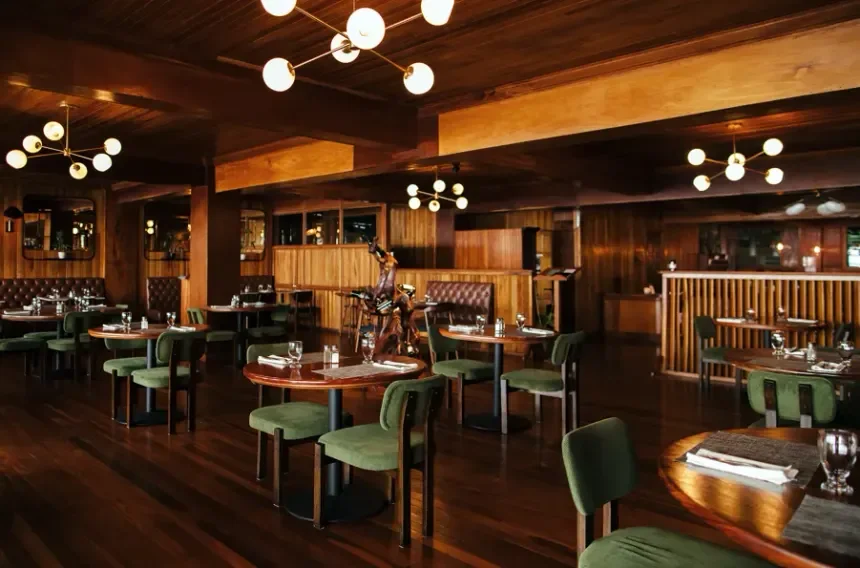
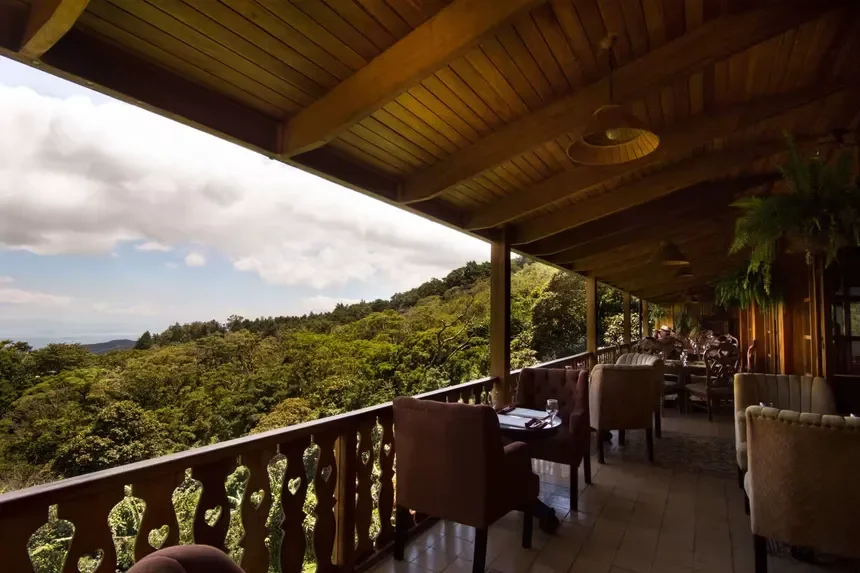
Fun fact, Hotel Belmar is the only hotel part of Design Hotels in Costa Rica. Design Hotels has booked our Green Temple for their annual book launch in past, and I love their curation of hotels. We’ve stayed at a few of them.
Days 13-19 (6 nights): Santa Teresa - Bohemian Beach Paradise & Surf
Focus: Relaxation, Surf Culture, and Pacific Beauty
Once a remote fishing village accessible only by rough dirt roads, Santa Teresa transformed organically into a bohemian surf paradise without losing its authentic charm. Located on the southern Nicoya Peninsula- part of one of the world's five Blue Zones where people live exceptionally long lives - Santa Teresa attracts wellness seekers, surfers, and free spirits. The area embodies a unique blend of surf culture, yoga communities, and sustainable living, all set against stunning Pacific beaches with world-class waves. Its gradual development preserved the laid-back atmosphere that makes it a perfect place to slow down and embrace coastal living.
Getting There:
Approximately 4,5 hours drive from Monteverde
Accommodations:
Mint Santa Teresa - The Deluxe Pool Room
We loved our stay at Mint in Santa Teresa, it’s a small boutique hotel with 5 rooms, and you all have breakfast together at a long big table. We ended up meeting really nice people and it felt like a great experience to have the social aspect added to this beautiful stay!
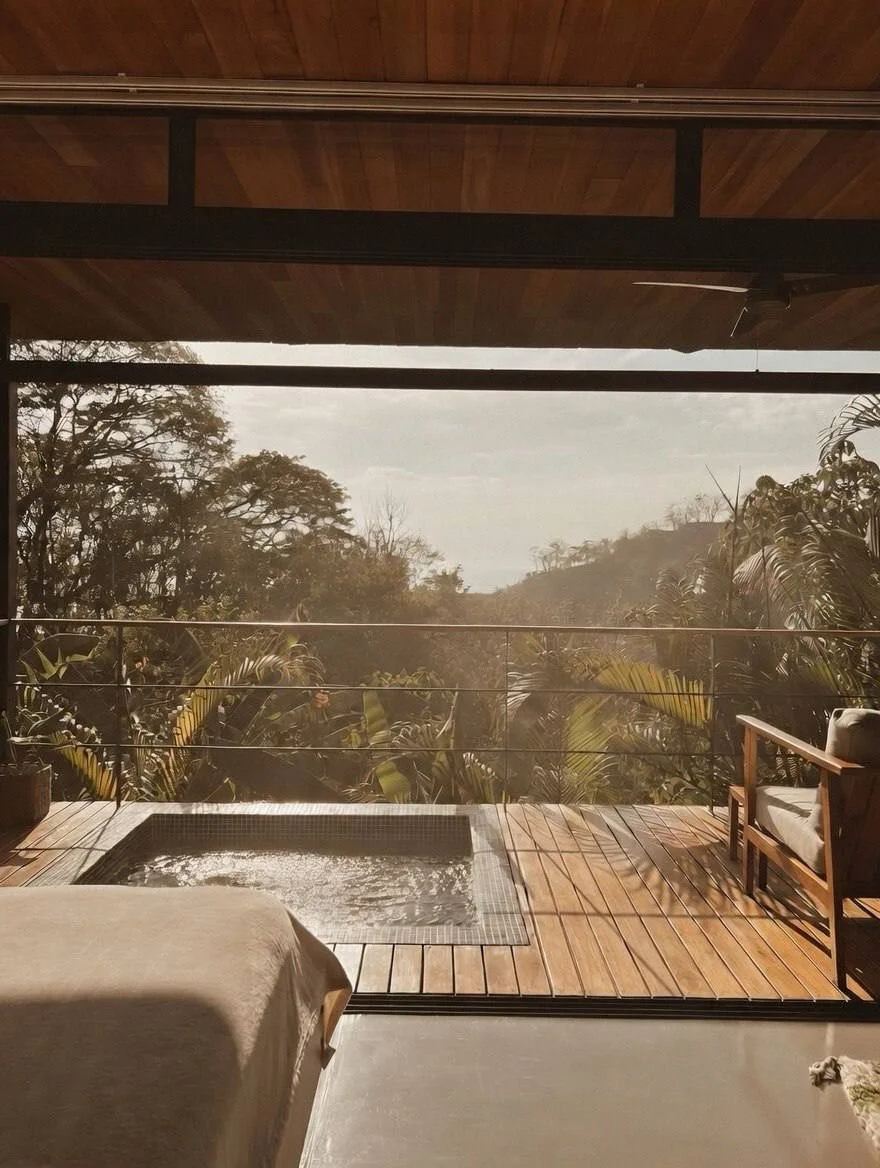
Green House had beautiful hummingbirds and Arakari’s flying in and out from our porch. It’s really nice for birdspotting and a great secluded spot to chill and read a book in the plunge pool!
Must-Do Activities:
Surfing/Yoga: Take a surf lesson or join a beach yoga class
Beach Exploration: Playa Hermosa, Playa Carmen, Playa Manzanillo. It’s really nice to visit some of the beaches outside of the center of Santa Teresa, as they also have the tide pools and they are beautiful pristine beaches. You’ll find a few good ones on your way to Cabo Blanco National Park.
Mal Pais Tide Pools: Natural pools filled with seawater during high tide - perfect for bathing during low tide
Blue Mist Hotel: book a spot at the beach for sunset, they have really nice food and happy hour with nice cocktails. We tried some other spots such as the Banana Bar and Fermata, but this was our favorite hangout!
Dining Recommendations:
The Somos Cafe: loved it here, healthy breakfasts in a cozy setting, they also serve dinner and cocktails
Blue Mist Hotel: very friendly staff, easy to make a reservation and good food at sunset!
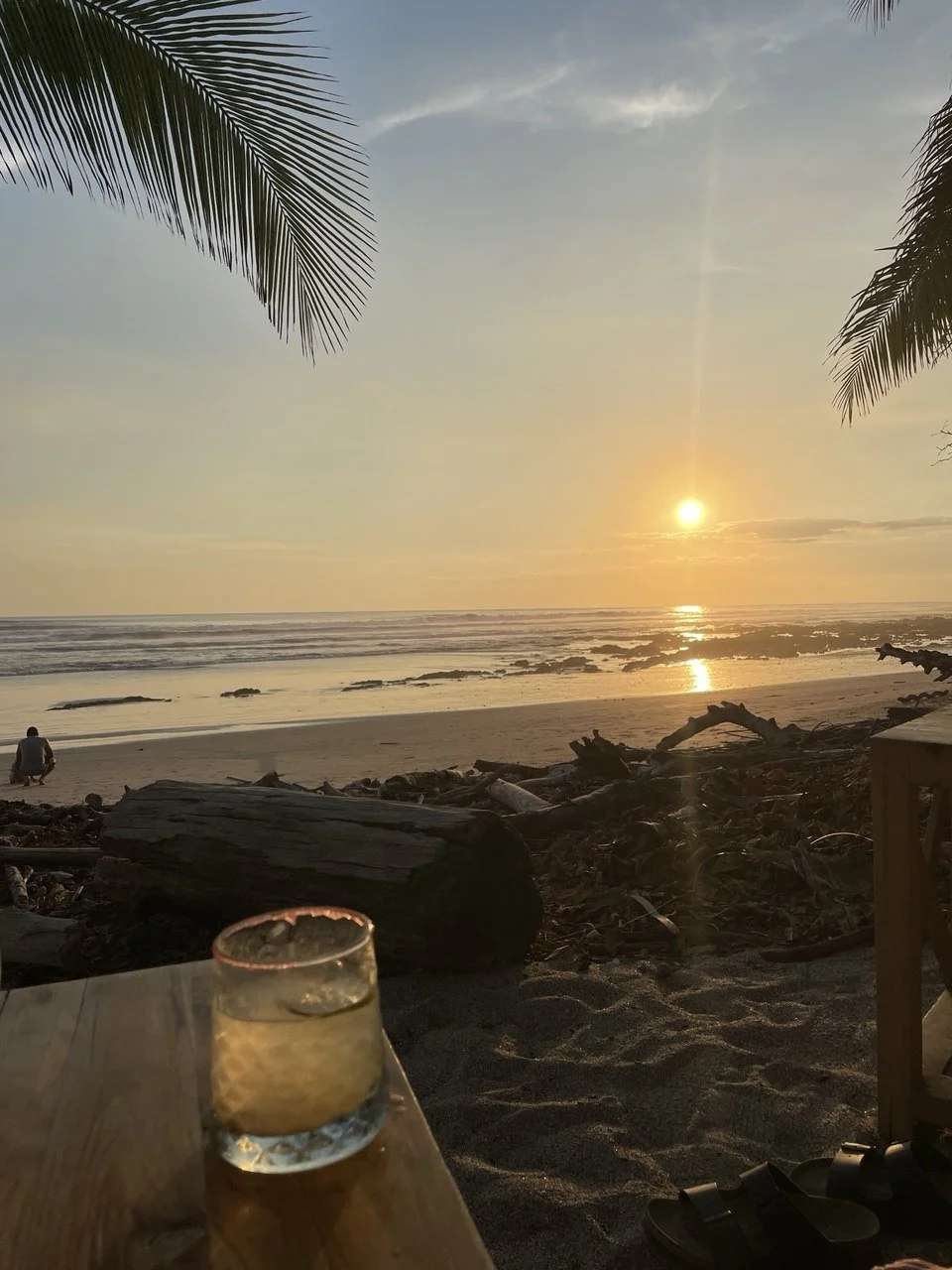
Our sunset spot at Blue Mist hotel in Santa Teresa!
Additional Activities:
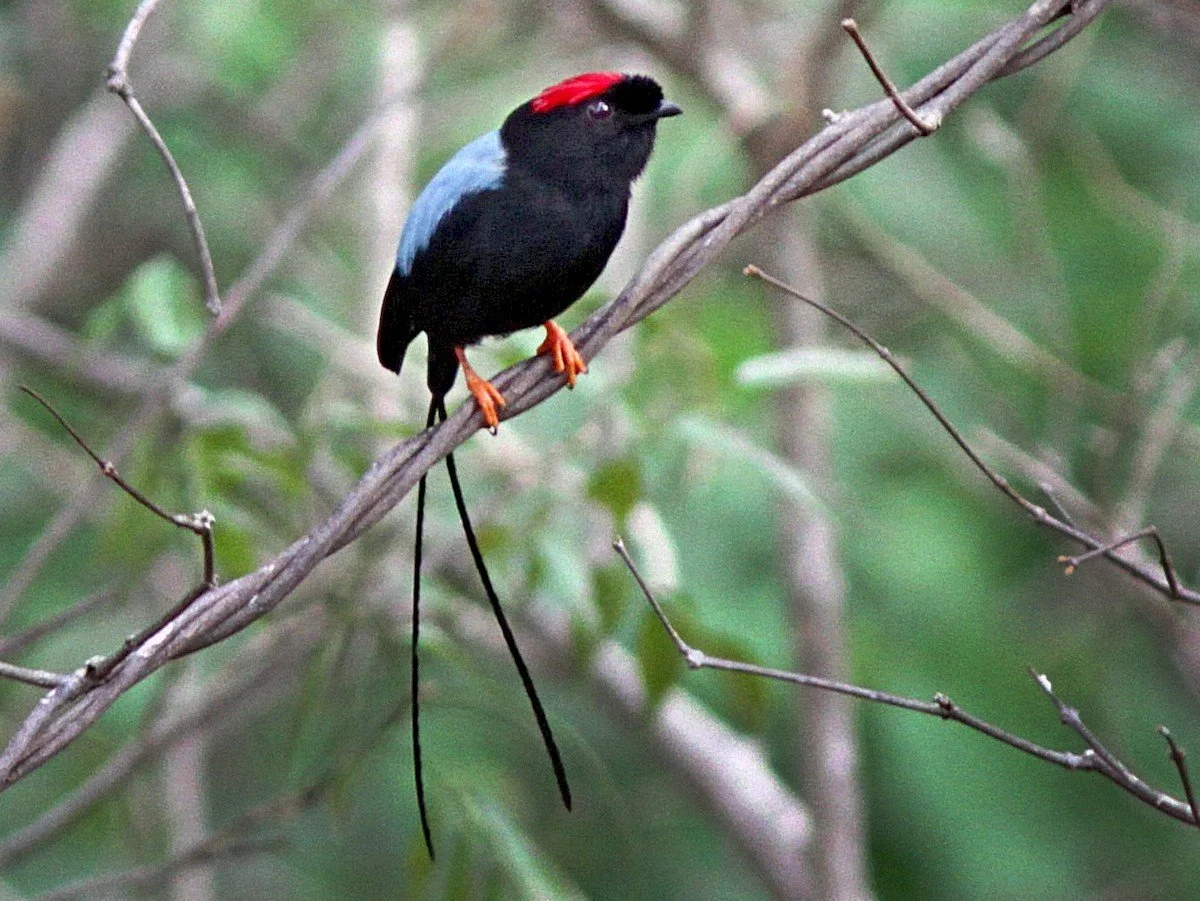
Long-tailed Manakin
Visit other National Parks, such as the Cabo Blanco Reserve. Here, we finally saw the bird that I still really wanted to see, the Long-tailed Manakin.
Go for a daytrip elsewhere, such as Montezuma, or visit Tortuga island.
Additional Travel Tips
VISIT NATIONAL PARK Carara
If you have missed the Scarlett Macaw in the wild, this park will have them. It’s maybe worth to shorten your trip in Santa Teresa a little bit and explore more parks on your way back to San Jose since the drive back is 5,5 hours. I would skip the overpass with the boat, it’s really over-crowded during high season and takes up a lot of travel time.
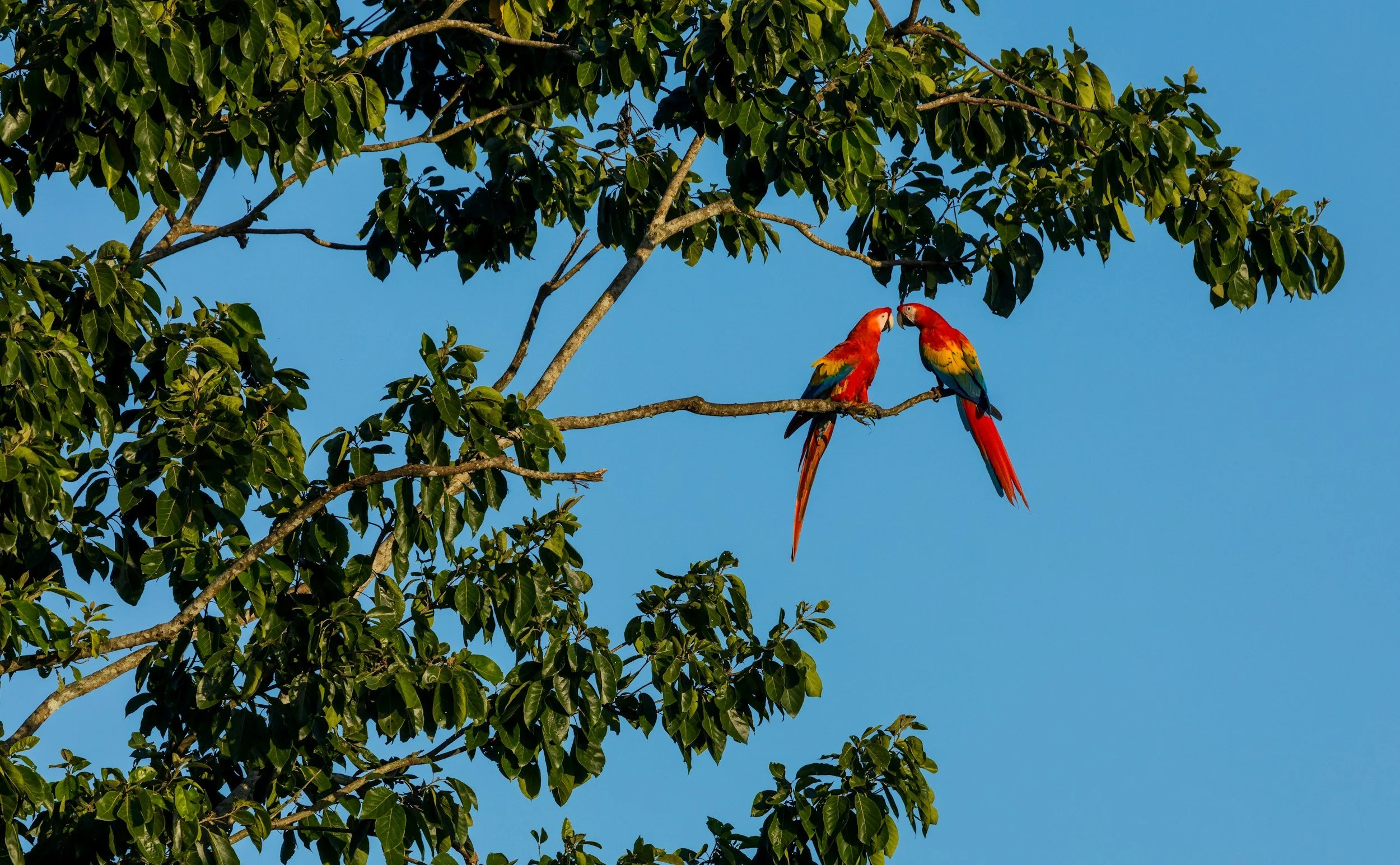
Scarlett Macaw
Packing Essentials
Clothing & Gear
Lightweight, breathable clothing for tropical climates, preferably linen as cotton doesn’t get dry in this humid climate. I always recommend to pack lightweight and do your laundry at the location. Especially linen is safe since you can have someone else wash it on 90 degrees (like they do in Thailand) and it’s going to be fine haha.
Waterproof rain gear; a simple lightweight poncho is enough, we hardly used it except for Tortuguero and Monteverde. I have to add, I travelled with my small North Face Base Camp duffel bag, which is waterproof. It’s a tropical climate, so when it rains, it really rains, so having that rain protection really helps. I also have a special rain cover for my backpack. I really recommend having both.
Depending on where you do the excursion, long-sleeved shirts and long pants are a great protection against insects and other critters for evening jungle excursions. But locals just wear shorts, a shirt, high shoes and tall socks, add some insect repellent and it does the job as well. Especially on warm nights you don’t want to dress too warm! And it’s good to know that most tours are not really off the beaten path.
Tall lightweight hiking shoes with good grip for potentially slippery trails. Something that I haven’t read anywhere was the need for long socks, but long socks are a must! I used long socks (above the height of my shoes) for every hike, to prevent sand or insects entering the shoes - it was one of the most important items on my pack list and luckily I brought more than enough pairs.
If you want to go water rafting slippers are not allowed, so if you have water shoes - bring them - as your shoes will be totally submerged in the river!
A warm sweater or a light jacket for cooler evenings in Monteverde (elevation 1,300m). Don’t overpack on warm clothes, you won’t need them much.
Sun protection: hat / cap, sunglasses and reef-safe organic sunscreen. Insect protection: organic insect repellent + DEET. Luckily, in the mountains there aren’t any mosquito’s!
Bring your own ear plugs, at many places they are provided, but it’s nice to have your own - and they are sometimes really needed, no matter how nice your stay.
A small lightweight waterproof dry bag is always great to have, also for your delicate belongings such as electronics. It’s helpful at the beach, needed at canoe / kayak adventures, and great at the airport as well - whenever you need to remove electronics for the security check - it’s all together in one bag.
A total must are binoculars for wildlife viewing. The 8x zoom is perfect, we felt the 10x would have been too much, as it makes it more challenging to find the right spot when it’s too zoomed in. Since binoculars can be heavy, it’s well worth getting lightweight ones! We used the binoculars everywhere, all the beautiful birds and seeing wildlife more up close in trees makes it way more fun! It made our whole wildlife experience so much better everywhere we went.
A powerful headlamp or flashlight for evening excursions.
A day backpack with air vent at the back is really helpful for daily excursions. I have a Hikelite18 from Osprey - and it’s the perfect size. The air circulation is a must when you’re in this heat and hiking for many kilometers every day.
A reusable water bottle. At some parks they also don’t allow plastic bottles, which I think is a great rule!
Bring a whole stack of organic nutbars for hikes. Costa Rica is not a place where you pick up a nice lunch on the go, so having nut/oat bars for some energy during hikes is a total life-saver.
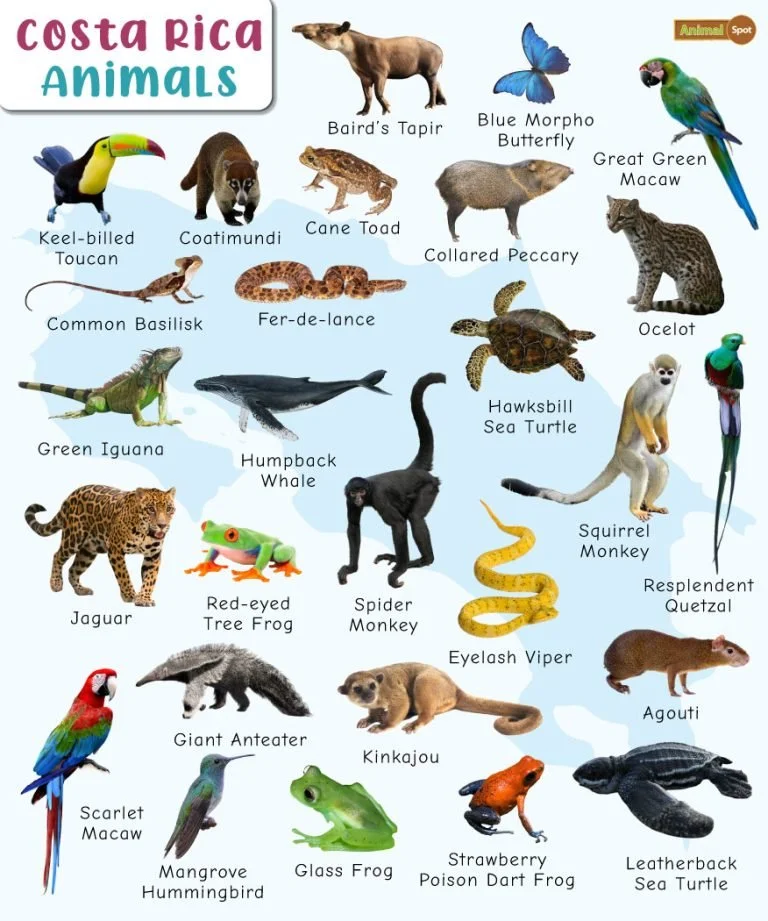
Come prepared! Make sure you have an overview of all the famous birds and wild life that you can find in each national park & region. How to recognize them, their habitat and how to find them! There is so much to see and discover, especially when you learn how and where to look! Costa Rica is known for its amazing wild life, so don’t miss out! Pro tip: install Merlin Bird ID - this app will listen and record the bird songs at your location and recognize each species, it honestly changed my life - and turned me into the prototype retired 70-year old bird watching fanatic - soooo much fun!
Remember to get sufficient cash in San Jose before heading out to remote places like Tortuguero, as there are no ATMs in that region - and the hotel we were staying was also paid in cash.
If you are a big traveller, I recommend using a Revolut card. You can open a bank account in the local currency for free and do a limit order swap to get a better deal than your native bank. This means you can swap euro’s for collones at a good rate and not worry about the fees of any other transaction you make there.
Safety Considerations
Costa Rica is a very safe country. People are helpful and friendly. Everyone speaks good English due to American tourism. It’s a really great country to travel around without a worry. I’ve never felt that the energy was off, except for the night time in Puerto Viego, which is at the border of Panama and we saw some drugs-infused people after dark. For the rest, it’s recommended to be mindful at night time in San Jose and avoid late night walking on beaches at any coastal area.
When bicycling in Puerto Viejo, bring lights for nighttime riding as street lighting is limited. In Santa Teresa, it’s really helpful to use a light at night as well, as there are no real pedestrian sidewalks and it will be easier for cars to spot you.
Be aware with the settings of your GPS navigation (download the maps in advance due to slow internet) - ensure it's routing you on accessible main roads, not through rivers or unmarked shortcuts (especially on your way back from Santa Teresa to San Jose). Google maps worked fine! A nice tip for hiking maps is the app Maps.me - which has offline maps as well.
The Reality of Costa Rican Cuisine
While Costa Rica offers incredible natural beauty, the local food scene can be underwhelming for some travelers. Traditional Costa Rican food is simple and often repetitive, centered around rice, beans, plantains, and basic proteins. The "sodas" offer authentic but basic fare. In tourist areas, you'll find more international options, but they are pricey and to be real, not so great.
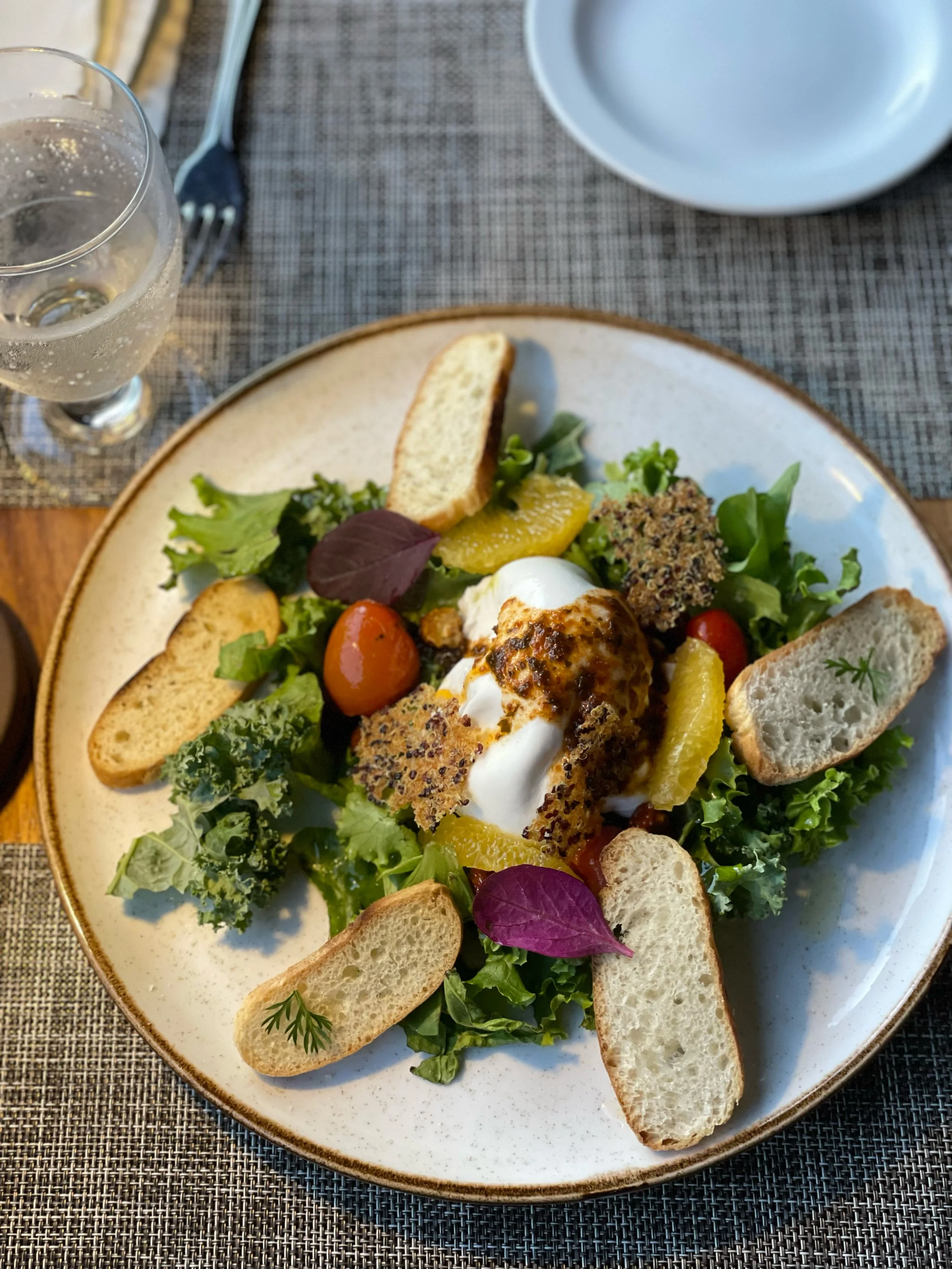
Homemade Burrata salad at Hotel Belmar
It wasn’t until we found a beautiful farm to table restaurant in the Design Hotel Belmar in Monteverde that our food experience really started to improve.
It’s good to embrace yourself for the simplicity or seek out the recommended restaurants in this guide for the best culinary experiences.
Pro tip: fresh fruit, coffee and mixed fruit juices are great everywhere - so indulge on that!
THE PERFECT Costa Rica Playlist
Music enhances any travel experience. This playlist is especially made for your Costa Rican adventure.
Spotify: https://open.spotify.com/playlist/2aAEwe8xFaWCQmCvJij5y4
Final Thoughts
Costa Rica offers an incredible diversity of experiences in a compact geography. This itinerary balances adventure, relaxation, wildlife viewing, and cultural immersion. This journey weaves through Costa Rica's distinct ecological realms, from Caribbean waterways and cloud forests to volcanic landscapes and sun-drenched shores, offering an extraordinary range of experiences and climates. Remember the country's motto "Pura Vida" (Pure Life) and embrace the slower pace, natural beauty, and warm hospitality that make Costa Rica special.
With proper preparation and a spirit of adventure, this journey through Costa Rica will undoubtedly be one of your most memorable travel experiences!